Views: 0 Author: Site Editor Publish Time: 2026-08-15 Origin: Site


Specifying pump materials based solely on hydraulic performance is a common engineering oversight. You might perfectly match the required flow and head, but ignoring the chemical makeup of the pumped fluid invites disaster. Many operators assume that any stainless alloy provides a universal safeguard against corrosion. This is fundamentally incorrect. Misjudging water chemistry leads to rapid pitting, severe crevice corrosion, catastrophic pump failure, and massive unplanned downtime. You must look beyond basic performance curves. A standard alloy might survive for decades in treated municipal water but fail within weeks in brackish environments. To ensure long-term reliability, you need a systematic evaluation framework. This framework must align your specific water chemistry profile with the correct metallurgical grade, compatible elastomer materials, and the right physical pump configuration. A well-specified stainless steel water pump requires a deep understanding of the fluid it will handle.
Chlorides dictate metallurgy: The concentration of chlorides in water is the primary driver for choosing between 304, 316, or Duplex stainless steel, quantifiable by the Pitting Resistance Equivalent Number (PREN).
Temperature accelerates chemical attacks: A stainless steel grade that resists corrosion at 20°C may fail rapidly at 60°C in the exact same water composition.
Oxygen is required for protection: Stainless steel relies on dissolved oxygen to maintain its protective chromium oxide layer; deoxygenated environments pose severe corrosion risks.
Application dictates configuration: Beyond material grade, the physical design—whether a stainless multistage pump for high pressure or a stainless self priming pump for variable suction—interacts with fluid dynamics to either mitigate or exacerbate localized corrosion.
Sanitary vs. Industrial standards: Food grade applications require specific surface finishes and elastomer compatibility that go beyond standard industrial chemical resistance to withstand harsh cleaning agents.
Chlorides are the most aggressive enemies of stainless alloys. They actively break down the passive chromium oxide layer that protects the pump casing and impeller. Once this layer breaches, localized pitting corrosion begins immediately. The industry evaluates a material's ability to resist this attack using the Pitting Resistance Equivalent Number (PREN). The standard formula is PREN = %Cr + 3.3(%Mo) + 16(%N). Higher numbers indicate greater resistance to chloride pitting. For context, standard 304 stainless has a PREN of roughly 18, while 316 stainless pushes that number to about 24 due to the addition of molybdenum.
Standard austenitic alloys have strict threshold limits for chloride exposure. At ambient temperatures, basic 304 stainless can typically handle up to 200 parts per million (ppm) of chlorides. Upgrading to 316 stainless pushes this threshold to roughly 1000 ppm. Exceeding these limits guarantees rapid material degradation. Chloride ions concentrate in microscopic surface defects, turning them into active anodic sites. The surrounding intact passive layer becomes the cathode, driving a highly localized and destructive galvanic reaction deep into the metal. This reaction hollows out the metal beneath the surface, often leaving only a tiny pinhole visible on the casing exterior while the internal structure is completely compromised.
Standard stainless alloys perform best in neutral to slightly alkaline conditions. The safe operating range typically falls between pH 6.5 and 8.5. Moving outside this window requires careful metallurgical consideration. Highly acidic water, defined as a pH below 6, aggressively strips the passive chromium layer. Industrial runoff, mining wastewater, and certain chemical dosing applications often feature low pH levels. These environments demand alloys with higher molybdenum content to maintain surface stability. When the pH drops below 4, even 316 stainless begins to suffer uniform corrosion, requiring a shift to specialized high-nickel alloys or non-metallic pump linings.
Alkaline environments present a different set of challenges. When water pH exceeds 9, the risk of mineral scaling increases dramatically. Calcium and magnesium carbonates precipitate out of the fluid and stick to pump internals. While high pH does not directly attack the metal, the resulting scale creates dangerous micro-environments. Corrosive agents concentrate beneath these deposits, leading to severe under-deposit corrosion. Because the scale blocks dissolved oxygen from reaching the metal surface, the stainless steel cannot rebuild its passive layer, allowing localized pitting to destroy the casing hidden beneath a layer of calcium.
Fluid temperature shares a non-linear relationship with corrosion rates. As a general rule of chemistry, reaction rates double for every 10°C increase. An alloy that easily handles 300 ppm chlorides at 20°C might suffer catastrophic pitting at 60°C. Elevated temperatures also drastically reduce the threshold for chloride-induced stress corrosion cracking (SCC). Standard 300-series alloys are highly susceptible to SCC when exposed to warm, chloride-rich fluids under mechanical tensile stress. This stress often comes from overtightened flange bolts or natural pipe strain, causing the pump casing to literally crack open along grain boundaries.
Heat also alters fluid dynamics. Higher temperatures increase the vapor pressure of the water. This directly reduces the Net Positive Suction Head Available (NPSHa) at the pump inlet. If NPSHa drops below the required threshold (NPSHr), the fluid boils locally, causing cavitation. The imploding vapor bubbles generate massive mechanical shockwaves. These shockwaves physically blast the passive chromium layer off the impeller. This exposes bare, unprotected metal to immediate chemical attack, rapidly accelerating overall wear. You will often hear cavitation before you see the damage; it sounds exactly like pumping gravel through the volute.
Stainless alloys present a unique chemical paradox. They require a continuous supply of aggressive oxygen to prevent corrosion. The material relies entirely on dissolved oxygen in the water to form and maintain its self-repairing passive chromium oxide film. This film is incredibly thin, measuring only a few nanometers, but it provides the entire basis for the metal's corrosion resistance. As long as oxygen is present in the fluid, minor surface scratches from particulates heal almost instantly.
Pumping deaerated water removes this protective mechanism. Stagnant well water, deep groundwater, and closed-loop boiler feed systems often lack sufficient dissolved oxygen. Nitrogen-blanketed storage tanks also strip oxygen from the fluid before it reaches the pump suction. In these low-DO environments, the passive layer cannot repassivate if damaged. The metal remains active and vulnerable. What should be a highly resistant alloy begins to corrode just like standard carbon steel. You must match the alloy to the oxygen profile of the system, sometimes requiring the injection of air or the use of completely different materials if DO cannot be maintained.
You must differentiate between pure chemical corrosion and mechanical erosion-corrosion. Total Dissolved Solids (TDS) and suspended particulate matter introduce a mechanical threat. High concentrations of silica sand, silt, or crystalline solids act like liquid sandpaper inside the volute. The velocity of the fluid accelerates these particles, turning them into microscopic projectiles that constantly bombard the internal surfaces of the pump.
These abrasives physically scour the protective passive layer away from high-velocity areas like impeller vanes and cutwaters. While the oxygen in the water attempts to rebuild the layer, the continuous abrasive action strips it away faster than it can heal. This exposes raw metal to whatever chemical threats exist in the fluid. Managing high-TDS fluids often requires hardening treatments, specialized coatings, or moving to duplex alloys that offer higher mechanical hardness alongside chemical resistance. Standard 304 and 316 are relatively soft austenitic metals and will erode quickly under heavy particulate loads.
Untreated well water, agricultural runoff, and raw wastewater often harbor biological threats. Microbiologically Influenced Corrosion (MIC) destroys pumps even in low-chloride, neutral-pH water. Sulfate-reducing bacteria (SRB) and iron-oxidizing bacteria thrive in these environments. They do not need light or high oxygen levels to multiply, making the dark, damp interior of a pump volute an ideal breeding ground during off-cycles.
These microorganisms attach to pump internals and form dense, slimy biofilms. Beneath these biological deposits, the bacteria alter the local chemistry. SRBs consume sulfates and excrete highly corrosive hydrogen sulfide gas directly onto the metal surface. You can often identify this by a distinct rotten egg smell when opening the pump casing. This creates an extremely localized acidic environment that rapidly pits standard austenitic alloys. Combating MIC requires strict chlorination protocols, frequent high-velocity flushing, or upgrading to highly alloyed materials that resist acidic attack.

Grade 304 serves as the baseline utility alloy for clean water applications. It contains 18% chromium and 8% nickel, providing excellent resistance to mild environments. Ideal use cases include potable water distribution, treated municipal water systems, and light commercial circulation. It performs exceptionally well when chloride levels remain below 200 ppm at ambient temperatures. For many standard building services and clean water transfers, 304 offers the best balance of performance and availability.
However, 304 has strict limitations. Deploying it in brackish water, stagnant sumps, or industrial wastewater introduces massive failure risks. It lacks the necessary alloying elements to resist localized pitting once chlorides concentrate. Using 304 outside its narrow comfort zone guarantees a shortened operational lifespan. Engineers often make the mistake of specifying 304 for outdoor cooling towers, forgetting that evaporation naturally concentrates the chlorides in the basin water over time, eventually exceeding the 200 ppm threshold and destroying the pump.
When baseline utility falls short, 316 becomes the default choice. The critical difference is the addition of 2% to 3% molybdenum. This single element drastically increases the PREN, providing robust resistance to pitting and crevice corrosion. A properly specified industrial stainless steel pump built from 316 easily handles moderate chloride levels up to 1000 ppm. It is the workhorse material for most chemical and heavy industrial facilities.
Target applications include reverse osmosis feed water, cooling tower circulation, and general chemical processing. The "L" variant (316L) features a lower carbon content, strictly kept below 0.03%. This prevents carbide precipitation during the welding process. When standard 316 is welded, the heat causes carbon to bind with chromium at the grain boundaries, depleting the surrounding area of its protective chromium. Using 316L ensures that the weld seams remain just as corrosion-resistant as the rest of the pump casing, preventing intergranular corrosion at structural joints.
Severe environments require advanced metallurgy. Duplex alloys feature a mixed microstructure containing roughly equal parts austenite and ferrite. This dual-phase structure provides twice the mechanical yield strength of standard 300-series alloys. More importantly, it offers near-immunity to chloride-induced stress corrosion cracking. The most common grade, 2205, boasts a PREN of around 35, making it vastly superior to 316 in aggressive fluids.
These materials dominate aggressive applications. Seawater intake, high-salinity brines, desalination plants, and harsh geothermal water systems demand Duplex or Super Duplex (like grade 2507) materials. While the initial material investment is higher, they survive conditions that would destroy 316 within weeks. Super Duplex pushes the PREN above 40, allowing it to handle raw seawater continuously without suffering from pitting or crevice corrosion, provided the fluid velocity remains high enough to prevent biological fouling.
Table: Metallurgical Properties and Application Limits
Material Grade | Molybdenum Content | Approximate PREN | Max Chloride Limit (Ambient) | Primary Application Profile |
|---|---|---|---|---|
304 Austenitic | 0% | 18 | < 200 ppm | Potable water, clean municipal systems |
316/316L Austenitic | 2.0% - 3.0% | 24 | < 1000 ppm | Industrial process water, RO feed |
Standard Duplex (2205) | 3.0% - 3.5% | 35 | > 5000 ppm | Brackish water, high-temp industrial |
Super Duplex (2507) | 3.5% - 4.5% | 42+ | Seawater Levels | Desalination, offshore brine handling |
Heavy-duty chemical dosing, cooling tower circulation, and aggressive wastewater management require robust pump architecture. The metal casing is only half the equation. You must match the mechanical seals and O-rings to the specific water chemistry. The elastomers often fail long before the metal degrades. A leaking mechanical seal will spray corrosive fluid directly onto the pump bearings and motor shaft, causing a complete mechanical failure even if the stainless casing remains perfectly intact.
For alkaline systems or hot water circulation, EPDM is generally the superior choice. It handles heat and basic solutions effectively. However, EPDM swells and fails rapidly if exposed to hydrocarbons or petroleum-based oils. If the wastewater contains acidic compounds, trace solvents, or oils, you must specify FKM (Viton) elastomers. For extreme chemical mixes, PTFE (Teflon) encapsulated O-rings provide the ultimate chemical resistance, though they lack the elasticity of standard rubber and require careful installation to prevent pinching.
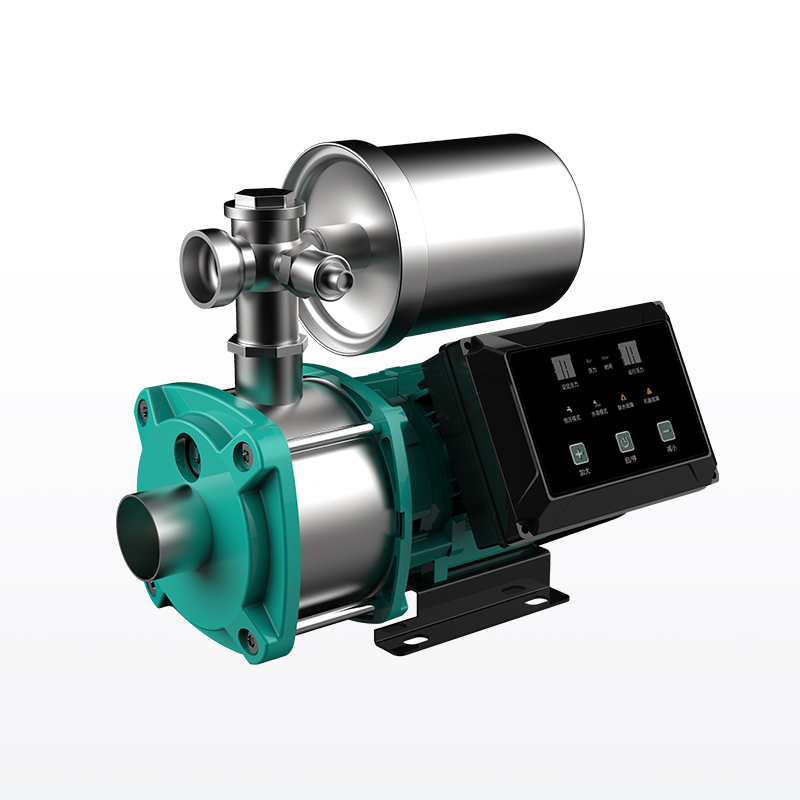
High-pressure applications like Reverse Osmosis (RO) and boiler feed rely on multistage configurations. A stainless multistage pump uses multiple impellers stacked on a single shaft to generate immense head pressure. This complex internal geometry interacts heavily with fluid chemistry. The high pressure forces fluid into every microscopic gap within the pump assembly.
The primary risk in multistage designs is crevice corrosion. The tight clearances between stage casings, diffusers, and wear rings create natural crevices. If the fluid contains moderate chlorides and flow becomes restricted, these tight spaces trap stagnant water. Chlorides concentrate, oxygen depletes, and localized pitting attacks the internal stage boundaries. Proper material selection and ensuring continuous minimum flow are critical to protecting multistage internals. You must also account for the massive axial thrust generated by high-pressure stages, ensuring the motor bearings are rated for the load.
Lift stations, sumps, and agricultural wastewater pits often require variable suction capabilities. A stainless self priming pump retains a volume of fluid in its volute to create a vacuum and lift water during the next start cycle. This operational necessity creates a unique chemical vulnerability that standard centrifugal pumps do not face.
During off-cycles, the fluid sits stagnant inside the casing. If the pump sits idle in a warm environment, water slowly evaporates from the volute. This evaporation concentrates the remaining chlorides and dissolved solids. Simultaneously, the stagnant water depletes its dissolved oxygen. This combination creates a highly aggressive, low-oxygen, high-chloride bath that accelerates localized corrosion. Frequent cycling or automated flushing is necessary to protect self-priming casings in aggressive environments. If the pump must sit idle for weeks, operators should manually drain the volute to prevent this concentrated chemical attack.
Sanitary applications operate under entirely different rules. A food grade stainless pump must comply with strict FDA, 3-A, and EHEDG sanitary standards. Standard industrial finishes are unacceptable. Food grade pumps mandate 316L metallurgy and specific surface roughness (Ra) requirements, typically polished to 32 microinches or better. The internal geometry must eliminate all dead legs where bacteria could hide. Many sanitary pumps undergo electropolishing to remove microscopic surface peaks and valleys, creating a mirror-like finish that prevents biological adhesion.
Furthermore, sanitary pumps endure brutal chemical attacks during Clean-In-Place (CIP) and Sterilize-In-Place (SIP) processes. Operators routinely flush these systems with high-temperature sodium hypochlorite (bleach), caustic soda, or peracetic acid. These harsh cleaning agents easily attack stainless steel if flushing protocols are inadequate or if residual chemicals remain in the casing. The pump must withstand both the product being pumped and the aggressive chemicals used to clean it. Elastomers in these pumps must also carry FDA compliance, typically utilizing food-grade EPDM or specialized silicone blends.
Even the highest-grade alloys remain vulnerable to crevice corrosion. This attack occurs in tight geometric spaces where fluid stagnates and oxygen cannot replenish. High-risk areas within pump architecture include O-ring grooves, threaded pipe connections, and the tight clearances behind impeller wear rings. Once oxygen is depleted in these micro-environments, the pH drops, and chloride ions rush in to balance the electrical charge, creating a highly acidic, localized attack.
Mitigation requires deliberate engineering choices. Specify flanged connections instead of threaded NPT fittings whenever possible, as threads create natural, unavoidable crevices. Ensure the system design maintains continuous minimum flow to prevent stagnation. Implement automated flushing protocols for standby pumps to ensure fresh, oxygenated water regularly sweeps through the casing. When assembling the pump, ensure all gaskets are cut perfectly to size; a gasket that protrudes into the flow path creates a downstream eddy current where debris and chlorides will accumulate.
Installing a highly noble alloy into a mixed-metal piping system introduces severe galvanic risks. If you connect a stainless pump directly to carbon steel or galvanized iron piping, the less noble metal (the piping) becomes the anode and corrodes rapidly. If the surface area of the piping is small relative to the pump, the reaction accelerates. The resulting iron oxide will flow directly into the pump, coating the stainless steel and initiating under-deposit corrosion.
You must physically isolate dissimilar metals. Use dielectric unions, non-conductive isolation kits, or transition spools to break the electrical connection between the pump and the piping. Additionally, address the risk of stray current corrosion. Improper electrical grounding of nearby equipment, or ungrounded Variable Frequency Drives (VFDs), can send stray DC currents through the fluid and into the pump casing. This mimics galvanic corrosion and rapidly degrades pump internals, regardless of the water chemistry. Always install proper grounding rings on VFD-driven motors and ensure the entire piping skid is bonded to a common earth ground.
Pull a fresh water sample from the exact installation site and send it to a certified laboratory for a complete chemical panel, focusing specifically on chlorides, pH, and dissolved oxygen.
Calculate the required Pitting Resistance Equivalent Number (PREN) based on the highest recorded chloride concentration and the peak system operating temperature.
Audit your existing piping infrastructure for dissimilar metals and install dielectric unions or isolation flange kits before mounting the new pump.
Specify mechanical seal faces and elastomer materials based on the most aggressive chemical present in the fluid, including any CIP cleaning agents or system flushes.
A: At ambient temperatures, 304 stainless steel can safely handle chloride concentrations up to roughly 200 ppm. However, this threshold drops significantly as fluid temperature increases. Exceeding this limit or operating in warmer water drastically increases the risk of pitting and rapid material failure.
A: Grade 316 contains 2% to 3% molybdenum, which 304 lacks. This addition significantly increases the alloy's resistance to localized pitting and crevice corrosion. It allows the pump to handle harsher environments, including chloride levels up to 1000 ppm, making it the standard for industrial applications.
A: It depends entirely on the specific alloy grade. A standard 304 or 316 self-priming pump will rapidly suffer from pitting and crevice corrosion in seawater. For true saltwater longevity, you must upgrade to a Duplex or Super Duplex alloy that can withstand high salinity and stagnant off-cycles.
A: Chemical reaction rates generally double for every 10°C increase in temperature. Elevated heat accelerates chloride attacks, increases the risk of stress corrosion cracking, and raises vapor pressure, which can lead to cavitation and the physical destruction of the protective passive layer.
A: Stainless steel requires a continuous supply of dissolved oxygen to maintain its protective chromium oxide layer. In deaerated or stagnant water, this passive layer cannot repair itself if scratched or damaged, leaving the bare metal vulnerable to rapid active corrosion.
A: For alkaline environments and hot water applications, EPDM is typically the best elastomer choice for O-rings and mechanical seals. However, you must ensure the fluid contains no hydrocarbons or oils, as these will cause EPDM to swell and fail rapidly.