Views: 0 Author: Site Editor Publish Time: 2026-09-30 Origin: Site


Managing a commercial facility, a high-rise residential complex, or even a modern home comes with a hidden drain on resources: outdated plumbing infrastructure. Imagine stepping into a shower only to have the flow drop to a mere trickle because a washing machine started in the next room. Or consider the frustration of a facility manager watching inconsistent water delivery disrupt daily cooling tower operations. Fixed-speed plumbing systems waste capital, cause perpetual maintenance headaches, and simply cannot keep up with modern demand.
The modernization of fluid management has introduced a definitive, engineered solution. By upgrading your mechanical room, you can eliminate these operational bottlenecks entirely. In this technical guide, we will break down the mechanics, the operational benefits, and the long-term financial advantages of modern pumping technology. You will see exactly how shifting from brute force to precision control optimizes both residential and industrial environments.
Massive Energy Savings: Field data confirms that upgrading can slash electricity consumption by 30% to 60% compared to traditional fixed-speed models.
Unwavering Water Pressure: Closed-loop sensor feedback guarantees stable water flow, regardless of fluctuating demand across multiple outlets.
Smart Diagnostics: Modern units feature automated, self-protecting microprocessors that prevent catastrophic system failures like dry-running.
Quiet & Compact: Advanced motor architecture allows for a significantly smaller physical footprint and whisper-quiet operation (often under 50dB).
Rapid ROI: The initial acquisition cost is typically recovered within 12 to 24 months through substantially lower utility bills and reduced maintenance.
To fully appreciate the advantages of modern fluid management, you have to look under the hood. This technology represents a massive leap forward from legacy AC induction motors. It shifts the engineering paradigm from running at maximum capacity 24/7 to intelligent, demand-based scaling.
This system integrates two distinct technologies into a single, cohesive unit. First, it utilizes a Permanent Magnet (PM) synchronous motor. Unlike conventional induction motors that require continuous electrical current to induce a magnetic field in the rotor, a PM motor uses rare-earth magnets built directly into the rotor itself. This structural design entirely eliminates rotor copper losses and drastically reduces heat generation.
Second, the architecture incorporates a Variable Frequency Drive (VFD). Think of the VFD as the brain of the operation. It dynamically adjusts the electrical frequency (measured in Hertz) supplied to the motor. By altering this frequency, the controller precisely manages the motor's rotational speed (RPM) in real-time based on actual system demand.
The synergy of these two components creates performance metrics that standard motors simply cannot touch. Even when a traditional variable frequency water pump uses a standard induction motor, it suffers from notable efficiency drops at lower speeds. However, when a VFD is paired with a permanent magnet motor, the system maintains premium IE4 or IE5 efficiency across its entire speed range. The result? Superior power density, instantaneous response times to pressure drops, and a system that adapts to your exact hydraulic requirements with surgical precision.
We are currently witnessing a massive regulatory and economic shift in global fluid management. With industrial electricity costs rising and ESG (Environmental, Social, and Governance) mandates tightening, continuous-duty induction motors are rapidly becoming financial liabilities. Regulatory bodies worldwide, including the U.S. Department of Energy (DOE) and the European Union’s Ecodesign Directive, are implementing stringent efficiency standards that effectively phase out lower-tier (IE2 and IE3) motors.
Consequently, the market is pivoting aggressively toward IE4 (Super Premium) and IE5 (Ultra Premium) standards. Permanent magnet motors naturally achieve these benchmarks. Furthermore, the rise of IoT-integrated Building Management Systems (BMS) demands equipment that can communicate real-time data, log fault codes, and adjust parameters remotely. Upgrading to this technology is no longer just a convenience; it is a strategic alignment with future-proof, compliant infrastructure.

For industrial facilities, commercial buildings, and large residential complexes, mechanical operation often accounts for a massive percentage of total electricity usage. Mitigating these operational expenses requires abandoning outdated, continuous-duty equipment.
The physics behind the energy savings can be explained by the Affinity Laws of centrifugal pumps. According to these principles, the power required by a pump is proportional to the cube of its speed. Specifically, if your facility only requires 80% of the maximum flow, the VFD slows the motor down to 80% speed. Because of the cubic relationship, the power consumption drops dramatically to roughly 51% of its maximum. If you only need 50% flow, the power consumption plummets to just 12.5%. By eliminating the wasted energy of running at full speed and manually throttling the output with valves, facilities see immediate, drastic reductions in power usage.
While the drive controls the speed, the motor itself dictates baseline efficiency. Legacy induction motors suffer from "slip" and thermal losses, which generate excess heat and leak electricity. PM motors eradicate these losses. As a result, an energy-saving pump utilizing permanent magnet technology ensures that almost every single watt of electricity drawn from the grid is converted directly into hydraulic work.
Decision-makers must look beyond the initial purchase price and evaluate the Total Cost of Ownership (TCO). Consider a commercial facility replacing a standard 10 HP (7.5 kW) fixed-speed unit that runs 12 hours a day. If the new system reduces average power consumption by 40%, the facility saves thousands of kilowatt-hours annually. Depending on local utility rates, the financial savings typically offset the higher initial procurement cost within 12 to 24 months. After this payback period, the continued efficiency translates directly into pure operational profit.
Beyond financial metrics, the most noticeable operational benefit for end-users is the absolute stability of the water supply. Fluctuating delivery is a hallmark of obsolete infrastructure that can now be entirely avoided.
In systems utilizing traditional fixed-speed pumps, pressure is highly dependent on immediate demand. If a single tap is open, the pressure might be overwhelmingly high, stressing pipe joints. Conversely, if multiple showers, toilets, or industrial washing stations are activated simultaneously, the pressure drops significantly. This volatility causes inconsistent manufacturing processes, uncomfortable residential experiences, and potential damage to sensitive plumbing fixtures.
A modern PM VFD constant pressure pump eliminates these fluctuations through a sophisticated closed-loop control system. The unit is equipped with highly sensitive transducers installed on the discharge line. The operator simply inputs a desired target threshold (e.g., 50 PSI or 3.5 Bar) into the interface. As demand changes, the sensor detects a momentary drop in line pressure and instantly sends a signal to the drive. The controller then ramps up the motor's RPM in milliseconds to compensate, holding the pressure perfectly stable regardless of how many fixtures are in use.
The modernization of plumbing technology has transformed these devices from simple mechanical workhorses into sophisticated, data-driven appliances capable of autonomous decision-making.
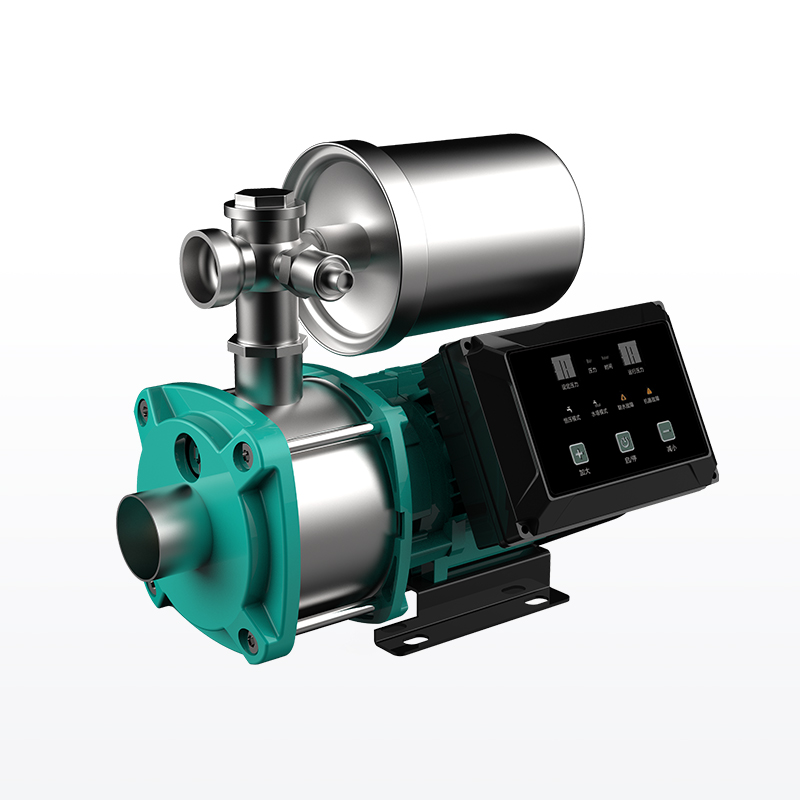
Historically, adjusting a commercial system required mechanical expertise, the physical turning of heavy valves, and manual pressure gauge readings. Today’s systems feature intuitive Human-Machine Interfaces (HMIs). Bright LED or LCD displays allow operators to set target pressures, monitor real-time power consumption, and view historical operational data with a few simple taps. This accessibility democratizes system management, allowing facility managers to optimize performance without requiring specialized electromechanical training.
From an engineering perspective, the true value of an intelligent pump lies in its ability to protect itself. Advanced controllers feature built-in microprocessors that constantly monitor voltage, current, internal temperature, and hydraulic load.
If the municipal water supply fails or a well runs dry, the system detects the lack of load and triggers Dry-Run Protection, shutting down instantly to prevent mechanical seals from burning out. Furthermore, the controller automatically halts operation during over-voltage, under-voltage, or phase-loss events, shielding the delicate motor windings from catastrophic electrical damage. In cold environments, some smart controllers can even periodically pulse the motor to keep water moving, preventing pipes from freezing.
Physical footprint and noise pollution are critical considerations, particularly in residential buildings, boutique hotels, and hospitals where mechanical space is limited and acoustic comfort is paramount.
Conventional fixed-speed units are notoriously loud. They run at maximum RPM continuously, generating significant mechanical vibration and hydraulic turbulence. Furthermore, standard induction motors require large, noisy cooling fans attached to the rear shaft to dissipate the intense heat generated by rotor losses.
Because VFD systems operate at lower speeds during periods of low demand, hydraulic noise is drastically reduced. More importantly, the high efficiency of the permanent magnet motor means it generates very little heat. Many modern designs utilize the water flowing through the casing to cool the motor housing, completely eliminating the need for a noisy external fan. This results in operational noise levels often dropping below 50 decibels—quieter than a standard household refrigerator.
Power density refers to the amount of power a motor can output relative to its physical size. Permanent magnet motors possess an exceptionally high power density. Because they do not require bulky copper windings on the rotor or oversized cooling fins, a PM motor is typically 30% to 50% smaller and lighter than an induction motor of the exact same horsepower. This compact architecture allows plumbers to install these systems in tight utility closets or crowded mechanical rooms where legacy equipment simply would not fit.
Minimizing downtime and extending the lifecycle of mechanical infrastructure is a primary objective for any facility manager. This advanced technology inherently reduces mechanical stress on the entire plumbing ecosystem.
When a traditional pump activates, it instantly draws a massive surge of electricity and slams the water forward at full force. This sudden hydraulic shock, commonly known as "water hammer," causes pipes to bang violently, stressing joints, valves, and sensitive fittings.
VFD technology employs a "Soft Start and Soft Stop" mechanism. When demand is detected, the motor gradually ramps up its speed over a few seconds, gently pressurizing the system. When demand ceases, it slowly ramps down. This smooth operation entirely eliminates water hammer, thereby protecting the structural integrity of the facility's plumbing infrastructure and preventing costly, hidden leaks.
Heat and friction are the primary enemies of rotating equipment. Because the unit operates at reduced speeds for the majority of its lifecycle, the mechanical seals and internal bearings experience significantly less friction. The elimination of rotor heat also prevents the thermal degradation of electrical insulation. This combination of lower operating temperatures and reduced mechanical wear effectively doubles the operational MTBF (Mean Time Between Failures) compared to legacy alternatives.
To make an informed purchasing decision, buyers must objectively compare the operational metrics of modern technology against conventional fixed-speed setups. The following table outlines the empirical differences across critical performance categories:
Performance Metric | Traditional Fixed-Speed Pump | Permanent Magnet VFD Pump |
|---|---|---|
Energy Consumption | Operates at 100% capacity regardless of demand, leading to high energy waste. | Adjusts power output dynamically based on real-time water demand. |
Pressure Stability | Fluctuates heavily when multiple fixtures are opened simultaneously. | Maintains strict constant pressure via continuous sensor feedback. |
Motor Efficiency | Typically IE2 or IE3 standard efficiency; high heat generation. | Achieves IE4 or IE5 premium efficiency; runs significantly cooler. |
Noise Levels | High decibel output from motor vibration and external cooling fans. | Whisper-quiet operation due to optimized RPM and lack of fan noise. |
System Protection | Relies on external relays and breakers; prone to dry-run damage. | Built-in smart diagnostics protect against dry runs and voltage spikes. |
Selecting the correct hardware requires matching the equipment's specifications to the physical realities of your water system. Oversizing leads to unnecessary capital expenditure, while undersizing results in inadequate pressure and motor strain. You need to look for specific engineering parameters.
Before procurement, calculate your absolute peak demand. Flow Rate (measured in GPM or m³/h) is determined by how many fixtures might realistically operate simultaneously. Head Pressure (measured in meters of lift) calculates the vertical distance the water must travel from the source to the highest fixture, plus the friction loss caused by the piping network.
For instance, if you are outfitting a commercial building or a demanding agricultural irrigation system, you need equipment built for continuous, variable loads. Look for models similar to the YC95-40 PM VFD series, which feature wide voltage compatibility (e.g., handling fluctuations between 160V-260V for single-phase or 320V-460V for three-phase), stainless steel wetted parts to prevent corrosion, and IP55 protection ratings for harsh environments.
When evaluating suppliers, prioritize established manufacturers who provide transparent performance curves and comprehensive technical documentation. For buyers seeking a verified, high-performance solution, exploring a dedicated high-efficiency pump from industry specialists ensures you receive equipment rigorously tested for both optimal energy efficiency and long-term mechanical reliability.
Upgrading to modern PM VFD technology is a definitive step toward solving chronic water pressure issues while simultaneously slashing monthly electrical consumption. By abandoning outdated, fixed-speed equipment, residential and commercial properties alike benefit from a quiet, durable, and highly responsive fluid management system.
The integration of intelligent diagnostics and self-protection mechanisms makes daily operation reliable and hands-off. Whether you are aiming to meet stringent ESG standards or simply want a stable water supply without the sting of high utility bills, the engineering data strongly supports making the switch. Ready to future-proof your infrastructure? Evaluate your current water system requirements today, calculate your potential energy savings, and explore top-tier models at Eiiman to find the exact specifications that match your facility's needs.
While the physical plumbing connections may appear straightforward, professional installation is strongly recommended. These systems require precise electrical wiring, proper grounding, and correct pipe sizing to function safely. Improper initial calibration of the VFD settings can lead to suboptimal efficiency or persistent sensor errors. A certified technician ensures the system is safely integrated and configured specifically to your unique water demand profile.
Empirical field data demonstrates that upgrading from a fixed-speed induction unit yields energy savings between 30% and 60%. The exact percentage depends heavily on your usage patterns. If your water demand fluctuates frequently, the drive will continuously lower the motor RPM during low-demand periods, maximizing your electrical savings.
Modern units are equipped with sophisticated internal sensors that monitor flow and internal temperature. If the municipal water supply is interrupted or a holding tank runs dry, the controller immediately detects the lack of water. The system triggers an automatic "dry-run protection" protocol, shutting down the motor instantly to prevent the mechanical seals from overheating.
Due to the soft-start/soft-stop mechanisms and the elimination of excessive heat generated by standard induction motors, PM VFD pumps experience significantly less mechanical and thermal wear. When properly maintained and sized correctly for the application, these systems frequently exceed 10 to 15 years of operational life, offering a much longer MTBF (Mean Time Between Failures) than traditional pumps.
Yes. Most commercial-grade PM VFD pumps are designed with smart connectivity in mind. They typically feature RS485 communication ports and support standard industrial protocols like Modbus RTU. This allows facility managers to integrate the pumps directly into their BMS for real-time remote monitoring, fault logging, and centralized pressure control.
They can be used outdoors provided they are explicitly rated for it. You must verify the Ingress Protection (IP) rating prior to purchase. An IP54 or IP55 rating indicates strong resistance to dust and splashing water. However, it is an engineering best practice to install the hardware under a protective enclosure to shield the digital display and sensitive electronic components from direct UV exposure and extreme freezing temperatures.