Views: 0 Author: Site Editor Publish Time: 2026-09-09 Origin: Site


Pumping systems consume a massive portion of global industrial energy. As facility managers and engineers grapple with soaring electricity costs and strict sustainability mandates, traditional pumps that run at full speed regardless of actual demand are no longer viable. They waste power, accelerate mechanical wear, and deliver inconsistent flow.
A permanent magnet variable frequency pump solves this dilemma. By combining synchronous motor efficiency with intelligent speed control, this technology adapts to real-time system demands. In this comprehensive guide, you will learn the exact engineering steps for VFD pump selection to ensure you choose the ideal equipment for your specific operational needs.
Energy Efficiency: Permanent magnet motors paired with variable frequency drives can slash energy consumption by 30% to 50% compared to standard induction motors under variable loads.
Precision Matching: Accurate sizing requires aligning the system’s flow rate, total dynamic head, and fluid properties with the pump's specific performance curve.
Pressure Stability: These units automatically modulate motor speed to accommodate fluctuating demand, eliminating pressure drops and water hammer.
Application Features: Specifying specialized features, such as self-priming volutes, prevents catastrophic dry-running failures.
Cost Analysis: While initial capital expenditure is higher, the Total Cost of Ownership (TCO) plummets due to long-term electricity savings and reduced mechanical fatigue.
Recent market intelligence and engineering trend analyses reveal a massive shift toward data-driven sizing in the fluid handling industry. Regulatory pressures are accelerating this transition. Initiatives like the US Department of Energy’s increasingly stringent pump efficiency standards and the EU's Ecodesign directives are actively phasing out fixed-speed, low-efficiency induction motors.
Upgrading to permanent magnet technology is no longer just an eco-friendly PR initiative. It has become a baseline requirement for regulatory compliance and securing competitive operational margins. Global facilities are transitioning away from mechanical throttling valves toward digital flow control. Consequently, precise calculation during the procurement phase is absolutely vital to maximize these new technological advantages.
To make an informed purchasing decision, you first need to understand the underlying mechanics of the equipment. This innovative solution integrates two distinct but complementary technologies: a Permanent Magnet (PM) synchronous motor and a Variable Frequency Drive (VFD).
Traditional induction motors rely on electrical currents to induce a magnetic field in the rotor. This process inherently generates excess heat and wastes energy. PM motors, conversely, utilize rare-earth magnets—such as neodymium—embedded directly into the rotor surface. This specific design eliminates the need for rotor windings. By eradicating rotor copper losses, the motor's baseline electrical efficiency skyrockets.
Acting as the operational brain of the system, the VFD continuously alters the frequency and voltage supplied to the motor. When these two technologies merge, they naturally create a highly responsive constant pressure pump. Instead of running at maximum capacity and fighting against restrictive mechanical valves, the integrated drive monitors real-time system pressure via external sensors. If water demand drops in a commercial building at night, the drive slows the motor down. It accelerates instantly during peak morning usage. This dynamic adjustment eliminates hydraulic shocks and prevents frustrating pressure fluctuations.
For procurement managers evaluating capital expenditures, justifying the transition from standard AC induction motors to PM technology requires empirical data. The primary drivers for this upgrade revolve around operational efficiency, physical footprint, and equipment longevity.
Feature | Standard AC Induction Pump | PM VFD Pump |
|---|---|---|
Motor Efficiency | Typically 85% - 90% (IE2/IE3) | 95%+ (IE4/IE5 Ultra-Premium) |
Part-Load Performance | Efficiency drops sharply below 75% load | Maintains a flat, high-efficiency curve at low speeds |
Flow Control Method | Mechanical throttling valves (wastes energy) | Intelligent VFD speed modulation |
Physical Footprint | Bulky and heavy | Up to 30% smaller and lighter due to high power density |
Operating Temperature | High heat generation from rotor currents | Runs significantly cooler, extending bearing life |
Pumping systems rarely operate at their maximum design capacity around the clock. Most experience variable demand, operating frequently at "part-load" conditions. Because there is no energy wasted in magnetizing the rotor, PM motors operate at peak performance even at low speeds. This translates directly into measurable reductions in kilowatt-hour consumption.
Furthermore, heat is the primary enemy of electrical equipment. PM motors lack rotor currents, meaning they run significantly cooler. This reduction in operating temperature directly extends the lifespan of the motor's insulation and internal bearings, ultimately increasing the mean time between failures (MTBF) and reducing unscheduled downtime.
Even with superior technology, human error during the specification phase can compromise system performance. Navigating the selection process with empirical data rather than relying on outdated industry habits is critical for long-term success.
The foundational metrics for any pump selection are flow rate and head pressure. Flow rate dictates the volume of fluid the system must move within a given timeframe. You must determine both the absolute maximum flow required during peak demand and the minimum continuous flow to prevent dead-heading.
Equally critical is calculating the Total Dynamic Head (TDH). TDH is the total equivalent height that a fluid is to be pumped, taking into account friction losses in the piping network. It consists of the static lift and the friction head caused by pipes, valves, and fittings.
Engineering Application: Instead of guessing, match your TDH and flow to specific product parameters. For instance, if your facility requires moving 5 cubic meters per hour (m³/h) against a 45-meter head, specifying a unit with the exact hydraulic footprint—such as the ZB5-45-SS series—ensures the pump possesses sufficient mechanical force without wasting capital on an oversized motor.
Once flow and TDH are established, engineers must plot a system curve representing the relationship between flow and hydraulic resistance. The intersection of this system curve with the manufacturer's pump performance curve dictates the operating point. For maximum reliability, this operating point must fall on or very close to the pump’s Best Efficiency Point (BEP). Operating too far outside this optimal zone causes excessive vibration, cavitation, and premature seal degradation.
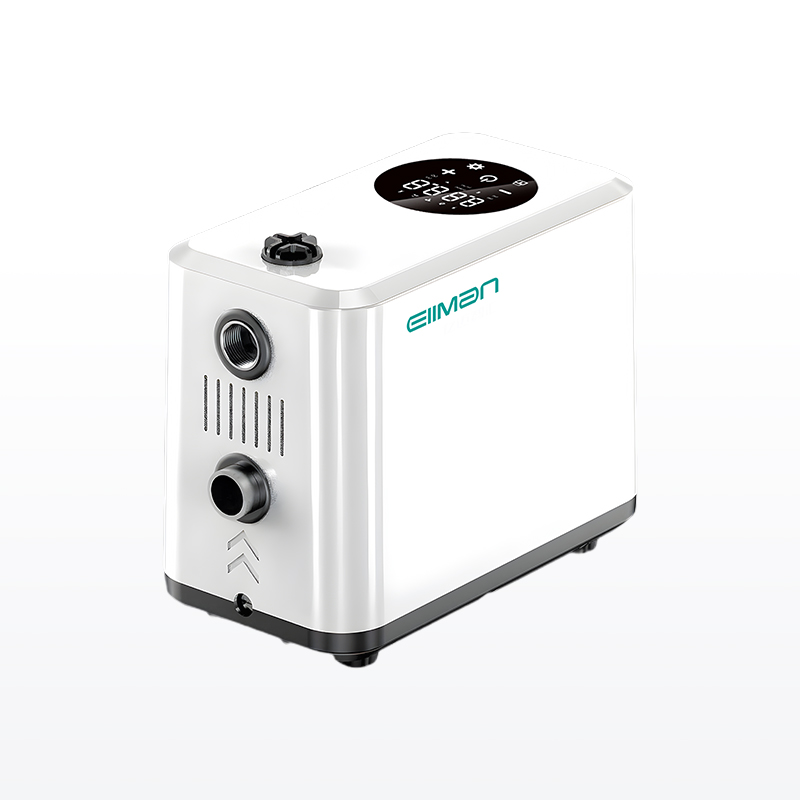
The versatility of PM VFD technology allows it to be deployed across a wide spectrum of industries. However, the specific demands of each application dictate the exact type of configuration required.
In large-scale heating, ventilation, and air conditioning (HVAC) systems, chilled and hot water loops require continuous circulation. The thermal load of a building changes throughout the day based on occupancy and external weather conditions. Utilizing a permanent magnet pump in these hydronic loops allows the flow to vary precisely with thermal demand. Following the Affinity Laws, reducing the pump speed by just 20% can yield nearly a 50% reduction in energy usage.
Maintaining consistent water pressure in high-rise commercial buildings or sprawling municipal networks is notoriously difficult due to erratic usage patterns. Imagine a towering residential complex during the morning rush hour: hundreds of showers and faucets open simultaneously. Deploying a high-efficiency water supply pump resolves this pressure volatility. The VFD ramps up the motor to maintain pressure during these peaks, then slows to a crawl during off-peak night hours, keeping the pipes perfectly pressurized while slashing energy costs.
Industrial manufacturing processes often require precise fluid dosing, cooling, or washing. Similarly, in agriculture, irrigation systems must distribute water evenly across vast topographies. In both scenarios, the ability to digitally control the flow rate without relying on restrictive mechanical throttling valves ensures optimal process control and resource management.
Not all permanent magnet pumps are manufactured to the same standard. When evaluating different models, specific hardware and software features separate premium, enterprise-grade equipment from basic commercial units.
Depending on your facility's architecture, the pump may need to be located above the fluid source, creating a negative suction head. Standard centrifugal pumps cannot evacuate air from the suction line. If they run dry, their mechanical seals will burn out in minutes. In these challenging scenarios, specifying a self-priming pump is mandatory. Specialized units feature an internal reservoir and a unique volute design that mixes air with fluid, evacuating the air through the discharge line to establish continuous flow without manual priming.
Modern facilities operate on data. Therefore, effective selection must account for the equipment's ability to communicate with centralized Building Management Systems (BMS). Look for drives equipped with onboard PID (Proportional-Integral-Derivative) controllers, which allow the pump to self-regulate based on sensor feedback. Native compatibility with industrial communication protocols—such as Modbus RTU or BACnet—is crucial for seamless integration and remote monitoring.
The metallurgical composition of the pump dictates its chemical compatibility and structural integrity. For municipal drinking water or food-grade processing, the wetted components must be constructed from highly corrosion-resistant materials. Specifying 304 or 316 stainless steel (often denoted by "SS" in model numbers like the ZB-SS series) is vital to meet sanitary standards. Conversely, for heavy industrial wastewater or closed HVAC loops, durable cast iron is often sufficient and more economical.
Procurement decisions based solely on the initial purchase price frequently result in massive long-term financial losses. In the lifecycle of a typical industrial pump, the initial capital cost accounts for less than 10% of the total expense. Energy consumption makes up a staggering 80% to 85% of the Total Cost of Ownership (TCO).
Because a permanent magnet water pump drastically reduces that 85% energy burden, its Return on Investment (ROI) is highly favorable. While the premium cost of PM technology may be higher upfront than a standard induction pump, the reduction in monthly electricity bills typically offsets this premium within 12 to 36 months. After the payback period, the energy savings transition directly into net operational profit.
Fixed-speed pumps start Across-The-Line (ATL), creating a massive inrush current and a violent mechanical jolt that stresses couplings and pipe fittings. A VFD provides a "soft start" and "soft stop," gradually ramping the motor speed up and down. This eliminates mechanical shock, drastically reducing the frequency of blown seals, ruptured pipes, and motor bearing replacements.
Corporate sustainability is a measurable metric demanded by stakeholders and regulatory bodies. Upgrading to high-efficiency PM motor technology directly reduces a facility's Scope 2 greenhouse gas emissions. Documenting these verifiable energy reductions helps organizations meet their Environmental, Social, and Governance (ESG) targets, potentially qualifying them for government energy rebates.
To ensure your investment yields maximum returns, avoid these frequent engineering pitfalls during the specification phase.
The most prevalent engineering error in fluid dynamics is applying an arbitrary "safety factor." Historically, engineers oversized pumps by 20% to 30% to account for potential future demand. Oversizing forces the pump to operate far to the left of its Best Efficiency Point. While a VFD can mitigate some penalties by slowing the pump down, running a massive pump at extremely low speeds is capital-inefficient and triggers internal recirculation and vibration.
Standard Totally Enclosed Fan Cooled (TEFC) motors rely on a shaft-mounted fan for cooling. If a VFD slows the motor down significantly, the cooling fan also spins slowly, often failing to remove enough heat. While permanent magnet motors naturally generate less heat, it is still critical to verify the manufacturer's turndown ratio. Continuous operation at extremely low frequencies may require a separately powered, constant-speed cooling fan.
Variable Frequency Drives convert AC power to DC, then simulate an AC output. This high-speed switching process introduces electrical noise, known as harmonic distortion, back into the facility's grid. High levels of Total Harmonic Distortion (THDi) can overheat transformers and interfere with sensitive electronics. Ensure the selected VFD includes built-in DC chokes or specify external harmonic filters to maintain strict power quality standards.
Selecting the right equipment requires careful load profile analysis and a deep understanding of your facility's operational demands. Accurate flow and head calculations ensure optimal daily performance, preventing premature wear and tear.
Transitioning to modern permanent magnet motor technology is one of the most profitable upgrades an organization can undertake. This shift delivers ultimate reliability, proven energy savings, and strict compliance with modern environmental standards. By prioritizing intelligent speed control and robust construction materials, you future-proof your fluid management infrastructure.
Ready to upgrade your system's efficiency? Don't leave your facility's performance to chance. Evaluate your specific flow requirements and choose equipment built for longevity and precision. Visit Eiiman to explore high-performance permanent magnet variable frequency pumps and self-priming solutions tailored to your industry, and contact our engineering team today for custom sizing assistance.
Yes. The integrated variable frequency drive continuously monitors the hydraulic pressure of the system via external sensors. It processes this data in real-time and automatically adjusts the motor's rotational speed to match the exact demand. This ensures that a steady, constant pressure is maintained throughout the entire network, regardless of how many valves, taps, or industrial processes are currently drawing fluid.
Absolutely. While the upfront capital expenditure is higher than that of a standard induction motor pump, the operational economics strongly favor the permanent magnet design. The technology delivers energy savings of up to 50% during part-load operations. For most commercial and industrial applications, these substantial reductions in monthly electricity bills result in a financial payback period of just 12 to 36 months, making the long-term ROI highly favorable.
A self-priming pump is engineered with a specialized casing that allows it to evacuate air from the suction line and draw fluid upward from a lower elevation. When paired with a VFD, the system can be programmed to run at a specific, optimal speed during the initial priming phase. This controlled acceleration ensures a safe and efficient prime without overheating the motor. Once the prime is fully established, the VFD automatically adjusts the speed to meet the standard operational requirements of the system.
To ensure an accurate and efficient selection, you must compile specific system data. You need the maximum and minimum required flow rates (measured in GPM or m³/h) and the Total Dynamic Head (TDH), which accounts for elevation changes and pipe friction. Additionally, you must provide the available power supply specifications (voltage and phase), the fluid's specific gravity and temperature, and a clear understanding of your facility's variable demand profile throughout a standard operating cycle.
Correct sizing requires calculating your system's Total Dynamic Head (TDH) and required flow rate, then plotting these on a pump performance curve. The goal is to select a pump where your normal operating conditions fall near its Best Efficiency Point (BEP). Avoid the common mistake of adding excessive "safety factors," which leads to oversizing, poor low-speed efficiency, and mechanical vibration.
When properly sized and maintained, a high-quality PM VFD pump can easily last 15 to 20 years. The absence of rotor heat in permanent magnet motors significantly extends the life of internal bearings and stator insulation. Furthermore, the VFD's soft-start capability eliminates mechanical water hammer, drastically reducing wear on mechanical seals, impellers, and connected piping infrastructure.