Views: 0 Author: Site Editor Publish Time: 2026-07-15 Origin: Site


Water hammer is a destructive kinetic energy spike inside your plumbing network. It happens when fast-moving water stops abruptly, causing a hydraulic shock that leads to banging pipes, stressed plumbing joints, and premature appliance failure. Municipal water supply fluctuations often create erratic flow dynamics in residential systems, and improperly sized traditional well pumps only compound the issue. Attempting to fix low pressure with a standard, single-speed pump can actually exacerbate hydraulic shock because these older pumps introduce sudden, high-velocity flow changes every time they cycle on or off.
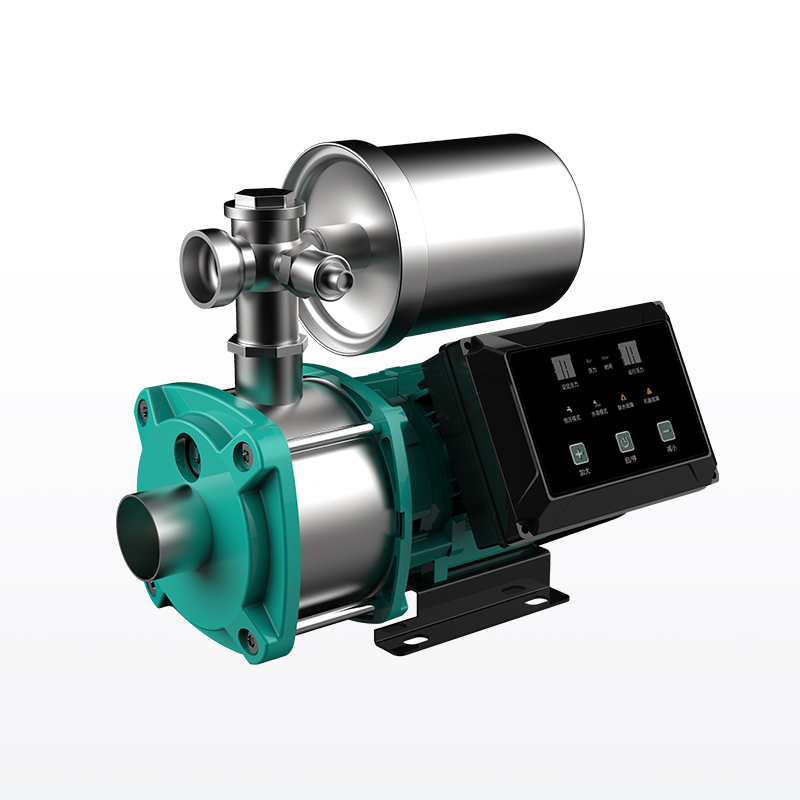
To resolve low pressure and hydraulic shock simultaneously, upgrading your plumbing infrastructure is necessary. A modern, digitally controlled residential water booster pump provides the definitive solution. Specifically, systems utilizing variable frequency drive (VFD) technology manage flow acceleration safely. They control deceleration precisely to prevent sudden stops, eliminating pipe banging, stabilizing household pressure, and protecting your entire plumbing network from catastrophic surge failures.
Root Cause Mitigation: Water hammer is eliminated by controlling the acceleration and deceleration of water; modern booster systems achieve this via soft-start and soft-stop motor controls.
Technology Shift: Replacing traditional on/off pressure switches with a residential constant pressure pump ensures flow matches demand exactly, preventing the sudden valve closures that trigger hydraulic shock.
System Synergy: A properly engineered domestic water supply pump must be paired with a correctly sized diaphragm expansion tank to absorb residual kinetic energy.
Long-Term ROI: While VFD booster pumps carry a higher initial hardware cost, they prevent catastrophic plumbing failures, protect high-end fixtures, and reduce overall energy consumption.
Hydraulic shock involves the rapid conversion of kinetic energy to pressure energy. This occurs when an open fixture closes instantly. The Joukowsky Equation conceptualizes this physical reality clearly, showing that pressure spikes are directly proportional to fluid density, velocity changes, and shockwave speed. When water moving at high velocity hits a closed valve, the energy must go somewhere. It rebounds through the piping, creating the loud banging noise known as water hammer. In the field, we see this energy blow apart CPVC joints and destroy the internal baffles of water heaters.
Homeowners must establish diagnostic protocols to differentiate true hydraulic shock from structural issues. Thermal expansion banging happens as hot water pipes heat up and rub against wood framing. Loose pipe hangers slapping against joists mimic the sound of water hammer. True hydraulic shock only happens immediately after a valve closes. Identifying the exact trigger prevents misdiagnosing the root cause.
Turn on the fixture suspected of causing the noise and let the water run for a full minute to establish maximum velocity.
Shut the valve as fast as possible while a second person listens near the exposed piping in the basement or crawlspace.
If the bang occurs the exact millisecond the valve closes and echoes back down the line, you have hydraulic shock.
If the noise occurs randomly while hot water is running, check for thermal expansion and missing pipe clamps.
International and local plumbing codes mandate strict physical thresholds to protect infrastructure. The International Plumbing Code (IPC) and Uniform Plumbing Code (UPC) require static household pressure to remain below 80 PSI. Flow velocity should stay below 5 to 8 feet per second. Exceeding these limits causes rapid pipe erosion and increases the risk of catastrophic surge pressures rupturing joints.
Modern appliances pose a significant threat due to fast-closing solenoid valves. Dishwashers, washing machines, and smart-touch faucets use valves closing in under 100 milliseconds. These rapid closures instantly arrest flow, triggering high-velocity shockwaves throughout the home. Standard plumbing systems simply cannot absorb these sudden energy spikes effectively.
Merely lowering your main water pressure does not stop water hammer. The actual solution requires managing the rate of change in water velocity. Installing a basic, fixed-speed home water booster pump without variable speed controls often worsens the issue. Fixed-speed pumps force water through pipes at maximum velocity regardless of actual demand, creating massive pressure spikes every time the pump activates or deactivates.

Variable Frequency Drive (VFD) mechanics fundamentally change how water is delivered. VFDs monitor line pressure in real-time using sensitive transducers. The drive adjusts the pump motor's RPM to match the exact flow requirement. If you open one faucet, the pump runs slowly. If you open three showers, the motor speeds up to maintain consistent delivery. This eliminates the brute-force approach of older pumps that only know how to run at 100% capacity.
Soft-start and soft-stop capabilities are critical for eliminating hydraulic shock. The pump gradually ramps up speed when a tap opens and slowly ramps down when a tap closes. This gradual transition eliminates the abrupt mechanical halts causing pipe banging. Kinetic energy dissipates smoothly rather than slamming into closed valves. We install these systems specifically to protect older, fragile copper piping networks from stress fractures.
Properly tuning the Proportional-Integral-Derivative (PID) controller settings is a technical necessity. Incorrect settings cause VFD "hunting." This state occurs when the pump rapidly cycles its RPM up and down. Hunting creates micro-shocks in the piping network. A correctly tuned PID loop ensures smooth, linear adjustments to motor speed, keeping the pressure dial dead steady.
Intelligent pump controllers also eliminate short-cycling. Older systems rapidly cycle on and off to maintain pressure tank levels, which is a secondary cause of pipe stress. Modern VFD controllers maintain a steady run state, drastically reducing mechanical wear and pressure spikes across the entire plumbing grid.
Demand-based delivery transforms the user experience. A residential constant pressure pump maintains a steady PSI regardless of demand. You can set the system to 65 PSI, and the pressure remains locked at 65 PSI whether one faucet or multiple appliances run simultaneously. This eliminates the annoying pressure drops common in older homes when someone flushes a toilet while you are in the shower.
Steady pressure provides essential valve protection. Erratic pressure fluctuations cause solenoid valves in dishwashers and washing machines to slam violently. Constant pressure ensures these valves operate smoothly, extending the lifespan of expensive appliances and preventing localized water hammer at the fixture level.
Homeowners must compare all-in-one integrated VFD pumps against modular systems. Integrated pumps house the motor, drive, and sensors in one compact unit. Modular systems pair a standalone pump with an external VFD controller and a separate pressure tank. Each configuration serves different property sizes and technical requirements based on the home's peak flow demand.
Integrated and modular systems offer distinct trade-offs. Integrated units feature a smaller footprint and built-in check valves, making them easier to install in tight utility closets. However, they are limited to specific flow rates and lower duty cycles. Modular systems are highly scalable for large estates. It is easier to replace individual components, such as the transducer or motor, but they require more technical sizing and dedicated floor space.
Specific application scenarios demand specialized equipment. A household self priming pump is necessary when drawing from an underground cistern or when pulling from a municipal line experiencing negative pressure. Standard centrifugal pumps cannot clear air from the suction line effectively, leading to air-binding and complete loss of prime.
Impeller designs dictate air handling capabilities. Multi-stage centrifugal impellers offer high efficiency for clean water delivery but struggle with air. Regenerative turbine impellers excel in self-priming configurations because they handle entrained air much better than standard centrifugal designs, pulling a strong vacuum to lift water from below-grade tanks.
Self-priming mechanisms interact closely with VFD controllers. The system must vent air pockets efficiently to prevent dry-running and cavitation-induced shock. Proper integration stops air-binding surges from creating erratic pressure spikes downstream, ensuring the VFD receives accurate pressure readings from the transducer.
Sizing metrics directly impact system outcomes. You must calculate peak demand based on fixture count using the Fixture Unit Method to prevent pump over-exertion. You must also determine the required boost capacity, which is the delta between your incoming municipal pressure and your target house pressure. Guessing these numbers leads to burned-out motors or inadequate flow.
Scalability and system integration require careful planning. Assess how the pump integrates with existing water treatment systems. Water softeners and reverse osmosis filters cause significant pressure drops and alter flow dynamics. The booster system must overcome these friction losses to maintain target pressure at the furthest fixture.
Backflow prevention introduces additional downstream pressure drops. Friction loss across Reduced Pressure Zone (RPZ) valves is substantial. The booster pump must be installed downstream of these devices to ensure you maintain your target household pressure after the water passes through the backflow preventer.
Evaluation Dimension | Technical Requirement | Impact on System Performance |
|---|---|---|
Flow Rate (GPM) | Calculated via Fixture Unit Method | Prevents pump over-exertion during peak usage. |
Boost Capacity (PSI) | Delta between incoming and target PSI | Ensures adequate pressure reaches top-floor fixtures. |
Certifications | NSF/ANSI 61 and 372 | Guarantees safe drinking water contact. |
Enclosure Rating | NEMA 3R or NEMA 4 | Protects controllers from basement moisture. |
Friction Loss | Account for filters and softeners | Prevents unexpected pressure drops at the showerhead. |
Compliance and safety standards are non-negotiable for a domestic water supply pump. Look for NSF/ANSI 61 and 372 certifications to ensure safe drinking water contact. NEMA enclosure ratings dictate environmental protection. NEMA 3R or NEMA 4 ratings protect the pump controller against basement moisture or outdoor exposure. Always comply with local plumbing codes regarding backflow prevention when installing booster pumps on municipal lines.
Evaluating upfront hardware costs against lifecycle value is essential. Premium VFD booster pumps carry a higher initial investment compared to standard single-speed pumps. However, the long-term operational savings and system protection far outweigh the initial expenditure. Standard pumps wear out faster due to harsh mechanical cycling, requiring frequent replacement of pressure switches and starting capacitors.
Risk mitigation value must factor into your decision. Quantify the financial risk of ignoring water hammer. Burst pipes behind drywall cause extensive property damage. Flooded basements ruin foundations and personal property. Erratic pressure voids appliance warranties. Investing in a constant pressure system protects your home from these expensive catastrophes, acting as an insurance policy for your plumbing infrastructure.
Energy efficiency provides ongoing financial returns. VFD pumps consume significantly less electricity over a 10-year lifespan because they rarely run at maximum load. By only using the exact amount of energy required to meet current demand, VFD systems lower monthly utility bills considerably compared to traditional pumps that draw massive startup amps every time a toilet flushes.
Improper sizing of the expansion tank is a common installation error. A widespread misconception claims VFD pumps do not need pressure tanks. A small diaphragm tank remains critical to absorb micro-shocks and prevent the pump from turning on for minor leaks. Sizing this tank correctly ensures smooth VFD operation and prevents the controller from throwing fault codes.
Installing a three-valve bypass loop is highly recommended. This mechanical layout allows homeowners to isolate the booster pump for servicing. You can bypass the pump without interrupting the main water supply to the house, ensuring continuous water access during maintenance or if the pump requires replacement parts.
Install a ball valve on the main line before the pump inlet.
Install a second ball valve on the main line after the pump outlet.
Install a third ball valve on a bypass pipe that routes water around the pump assembly.
Keep the bypass valve closed and the inlet/outlet valves open during normal operation.
Pressure transducer location dictates system stability. Place the transducer downstream of the pump's check valve and upstream of the expansion tank. Incorrect placement causes erratic VFD sensor readings, leading to pump hunting and unstable household pressure. The sensor needs a clean, undisturbed flow path to read accurately.
Electrical infrastructure requirements demand attention. VFD systems need dedicated circuits to operate safely. Surge protection is vital for sensitive VFD microprocessors, as power spikes will fry the main board. Voltage drops severely affect VFD performance, so ensure your electrical panel can support the motor's amperage draw and use the correct gauge wire for the run length.
Vibration isolation prevents mechanical noise from echoing through your home. Install braided stainless steel flex hoses on the pump's inlet and outlet to break the rigid pipe connection. Use anti-vibration mounting pads under the pump base. These strategies prevent transferring motor resonance into the home's wooden framing, keeping the installation whisper-quiet.
A standard fixed-speed pump acts as a liability when dealing with water hammer. A VFD-driven residential water booster pump stands as the definitive engineering solution. It resolves low pressure while simultaneously eliminating hydraulic shock through precise motor control, protecting your pipes and appliances from destructive kinetic energy.
Prioritize systems featuring built-in VFDs, soft-start technology, and dry-run protection. Ensure the equipment carries necessary NSF certifications for potable water safety. Proper component selection guarantees long-term reliability and peace of mind for your household water supply.
Take these actionable steps to upgrade your system:
Test your baseline static and dynamic water pressure at the main supply line using a standard hose bib gauge.
Calculate your home's peak GPM demand by counting total fixture units to avoid undersizing the pump.
Hire a licensed plumbing contractor to design a three-valve bypass loop for the new installation.
Install a properly sized 1-to-2-gallon expansion tank alongside your new VFD pump to absorb micro-shocks.
A: Yes. Fixed-speed pumps operate at maximum velocity immediately upon activation. They force water through pipes rapidly and stop abruptly when the pressure switch trips. These sudden flow changes create massive pressure spikes, directly causing or worsening water hammer.
A: Yes. While a VFD pump stops system-wide hydraulic shock from pump cycling, point-of-use arrestors remain necessary. Fast-closing solenoid valves on washing machines and dishwashers still create localized shockwaves. Arrestors absorb this energy right at the fixture.
A: A standard system relies on volume-based mechanical switching, turning on at a low pressure and off at a high pressure. A VFD pump uses demand-based variable speed technology. It constantly adjusts motor RPM to maintain one exact pressure setting.
A: VFD systems require much smaller tanks than traditional setups. A small 1-to-2-gallon buffer tank is usually sufficient. This small tank absorbs micro-shocks and prevents the pump from activating due to tiny system leaks or dripping faucets.
A: A VFD pump helps by maintaining steady pressure, which prevents valves from slamming erratically. Its soft-stop feature also reduces overall system stress. However, you still need localized water hammer arrestors installed at the washing machine supply valves for complete protection.
A: Hunting occurs when incorrect transducer placement or poor PID settings cause the pump speed to oscillate rapidly. The motor constantly speeds up and slows down. This erratic behavior generates micro-shocks in the piping, mimicking minor water hammer symptoms.
A: No. Modern VFD controllers feature self-diagnostic capabilities that alert you to issues like dry-running or voltage drops. They also lack the mechanical pressure switches found on older pumps, eliminating a common point of mechanical failure and reducing overall maintenance needs.