Views: 0 Author: Site Editor Publish Time: 2026-06-01 Origin: Site


Extending the electrical grid to remote pastures often feels like an impossible hurdle. Hauling water manually drains labor hours and fuel budgets rapidly. Ranchers need a better way to hydrate their herds.
Modern agricultural operations are transitioning to off-grid solar water pumping for highly practical reasons. It serves as a verifiable strategy to reduce long-term operational costs and protect herd health. Pumping water efficiently directly impacts your bottom line.
This guide breaks down the financial realities of leaving the grid behind. You will learn system sizing frameworks and risk mitigation strategies. We will also explore how to evaluate and implement a reliable pumping system for your livestock operations.
Grid Economics: Extending power lines often costs $10,000–$30,000 per mile; a solar pump system amortizes to roughly $0.03–$0.15 per head/day over a 10-year period.
Herd Health: Pumping to dedicated troughs keeps cattle out of riparian zones, reducing waterborne diseases and potentially increasing weaning weights.
Storage Hierarchy: For livestock reliability, physical energy storage (oversized water tanks holding 3–10 days of water) is fundamentally more efficient and cost-effective than chemical storage (batteries).
System Longevity: Specifying brushless DC motors, MPPT controllers, and mandatory dry-run protection float switches prevents catastrophic equipment failure.
Evaluating water solutions begins with a stark look at capital expenditure (CapEx) and operating expenditure (OpEx). The initial cost of solar equipment typically ranges between $2,500 and $7,500. This might seem high initially. However, you must compare it against the exorbitant sunk costs of grid extension. Utility companies often charge upwards of $10,000 per half-mile to run new power lines. This makes grid extension financially prohibitive for most remote pastures.
Diesel generators offer another common alternative, but they introduce heavy OpEx burdens. Generators require recurring fuel logistics. They leave you vulnerable to fluctuating diesel prices. They also demand high mechanical maintenance intervals. A well-designed Solar Pump eliminates these ongoing expenses entirely. Sunlight provides free daily energy without delivery fees.
Cost Comparison: Watering Methods | |||
Watering Method | Initial CapEx | Ongoing OpEx | Maintenance Level |
|---|---|---|---|
Grid Extension | Extremely High ($10k+/mile) | Low (Monthly Utility Bill) | Low |
Diesel Generator | Medium | High (Fuel, Oil, Parts) | High |
Solar Pumping | Medium ($2.5k - $7.5k) | Zero | Extremely Low |
Beyond simple utility savings, you unlock secondary returns on investment through improved livestock yield. Dispersed watering stations offer significant operational benefits. Access to clean trough water prevents cattle from mud-bogging in natural ponds. This behavior minimizes hoof and udder diseases. Verifiable agricultural data shows that clean, accessible water can increase calf weaning weights by up to 50 pounds. This yield increase accelerates your return on investment drastically.
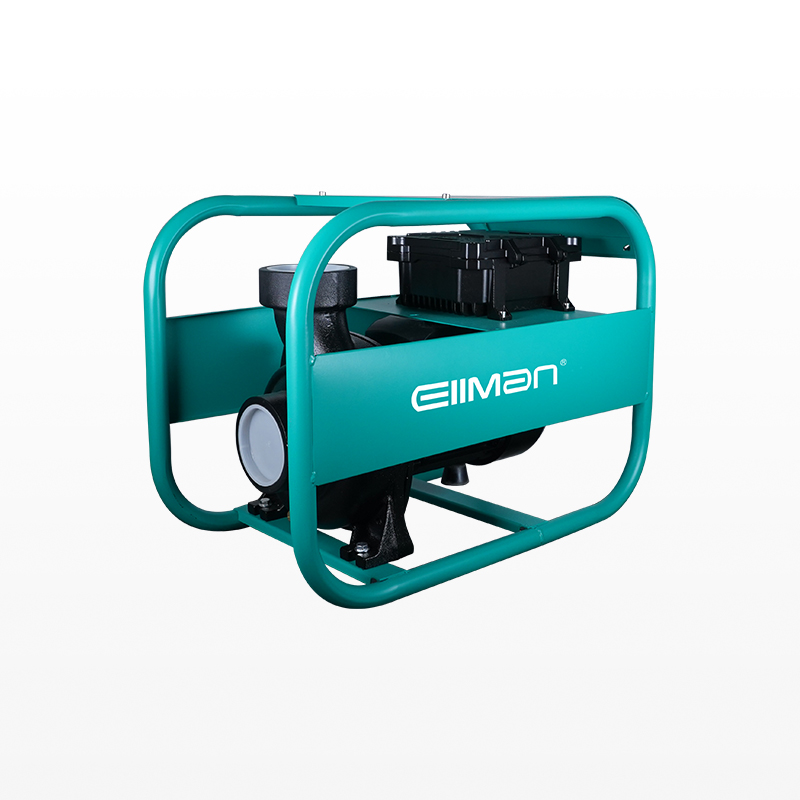
Off-grid reliability relies on specific, field-tested components. Brushless DC (BLDC) permanent magnet motors represent the gold standard for agricultural pumping. Direct current (DC) pumps are heavily preferred for off-grid use. They use roughly one-third to one-half the energy of traditional alternating current (AC) pumps. Furthermore, brushless motors provide a massive maintenance advantage. They contain no carbon brushes to wear out or overheat over time. This design prevents frequent burnouts.
Maximum Power Point Tracking (MPPT) technology serves as the brain of the operation. Built-in MPPT controllers actively optimize the voltage coming from your solar panels. This enables the motor to operate efficiently even during low-light conditions. Cloudy mornings or overcast afternoons will not completely halt water production. The MPPT controller adjusts dynamically, capturing every available watt to keep water flowing.
You must also categorize your needs between submersible and surface models. Submersible units drop directly down deep wells. They handle high-lift requirements and easily support large herds. Conversely, surface pumps sit above ground. They draw water from shallow ponds, creeks, or storage tanks. Surface models typically cost less and work perfectly for lower-cost, low-lift deployments.
Guessing your equipment size often leads to dry troughs or wasted capital. You must follow a rigid sizing framework to guarantee success. This mathematical approach matches your specific herd size to your geographical realities.
Step 1: Baseline Daily Water Requirements
You must calculate daily consumption accurately. Standard agricultural baselines state that lactating cows require about 17.5 gallons per day. Sheep require roughly 2 gallons per day. However, climate modifiers play a massive role. Water demand can easily spike 2.5 times higher in extreme 70–95°F+ heat. Always size your system for the peak summer heatwave, not the mild spring average.
Step 2: Total Dynamic Head (TDH) Calculation
TDH represents the total resistance your equipment must overcome to move water. You define TDH by adding three metrics. First, measure the static water level depth. Second, add the vertical lift from the ground up to the trough. Third, calculate pipe friction loss, which usually adds 2–5% to the total.
Expert Implementation Note: Placing a unit deeper in the well does not increase its head load. The actual head load is based entirely on the static water surface level, not the depth of the intake.
Step 3: Solar Array Sizing
Finally, address the necessity of matching panel wattage to your specific TDH and desired Gallons Per Minute (GPM). You must factor in your geographic peak sun hours. A ranch in Arizona requires fewer panels than a farm in upstate New York to pump the exact same volume.
Baseline Daily Water Requirement Chart (per head) | ||
Livestock Type | Average Climate (Gallons/Day) | Hot Climate Peak (Gallons/Day) |
|---|---|---|
Lactating Beef Cow | 17.5 | ~43.0 |
Dry Beef Cow | 12.0 | ~30.0 |
Horse | 12.0 | ~30.0 |
Sheep / Goat | 2.0 | ~5.0 |
Every solar-powered system faces one primary vulnerability: diminished output during overcast weather. We call this the "cloudy day" problem. Sun-dependent equipment will naturally slow down when thick storm clouds roll in. You must plan for this inevitability to protect your herd.
Physical water storage triumphs over battery banks in agricultural settings. We strongly argue against relying on chemical batteries for livestock systems. Batteries introduce complex failure points. They degrade quickly in extreme temperatures. They require expensive replacements every few years. They also lower the overall electrical efficiency of your setup. Instead, we advocate for oversized physical holding tanks.
Establish a strict rule of thumb for your ranch. Install enough reserve water capacity to last 3 to 10 days, depending on regional weather patterns. If you experience frequent week-long storms, build a 10-day reserve. Gravity will feed the troughs from the tank reliably, rain or shine.
Panel positioning also mitigates risk. Static mounts represent the cheaper option. However, static mounts require seasonal tilt adjustments. You generally set them to your local latitude plus or minus 15 degrees. Alternatively, tracking mounts require higher CapEx but physically follow the sun. Trackers yield approximately 25% more total water during long summer days. This extra yield helps fill massive storage tanks much faster.
Agricultural equipment operates in brutal conditions. Implementing fail-safes prevents minor hiccups from becoming catastrophic expenses. A poorly protected setup will inevitably destroy itself over time.
Dry-Running Protection: Pumping a well dry introduces fatal risks. Running without water rapidly destroys mechanical seals and burns out expensive motors. You must specify the mandatory inclusion of low-water float sensors. These sensors automatically shut off power when water levels drop dangerously low.
Soft-Start Technology and VFDs: Built-in Variable Frequency Drives (VFDs) enable intelligent motor control. They allow for "soft pressure build-up" upon starting. This gradual spin-up eliminates violent water hammer inside your pipes. Protecting pipe joints from water hammer expands the total lifespan of your infrastructure.
Piping Realities: Material choices matter down the well. We strongly recommend using 3/4" or 1" black HDPE poly pipe over rigid PVC. HDPE offers incredible flexibility. Its continuous flexible nature allows for easier initial installation. It also makes future pulling for maintenance possible without unthreading dozens of glued sections.
Navigating the procurement phase requires strategic thinking. Ranch managers without electrical engineering backgrounds often struggle to match components manually. Connecting incompatible panels, controllers, and motors leads to costly electrical failures.
We heavily recommend pre-engineered "turnkey" solutions over piecemeal builds. Turnkey kits guarantee component compatibility right out of the box. The manufacturer matches the panel wattage perfectly to the controller and the motor. This eliminates the guesswork and protects your warranty status.
Warranty coverage and wear-part transparency separate trustworthy brands from cheap imports. Honorable manufacturers demonstrate transparency by noting that helical rotors are consumable wear parts. They typically require replacement every 5 to 7 years due to sediment friction. When evaluating options, look for comprehensive warranties. A reliable kit should offer 20+ years on solar panels and 2+ years on electronics. Some industry leaders even provide lifetime guarantees on internal rotors. This transparency ensures you understand exactly what long-term ownership looks like.
A solar-powered watering system represents a heavy upfront investment that rapidly proves its value. It eliminates recurring fuel costs entirely. It bypasses massive grid-extension utility fees. It also provides highly automated operation that frees up your daily labor hours.
Begin your procurement process by gathering accurate field data. Log your exact well depth and the resting static water level. Calculate your peak summer livestock head count to determine maximum daily demand. Accurate data prevents expensive undersizing mistakes.
Do not leave your herd's hydration to chance. Use a dedicated sizing calculator or contact a qualified system engineer today. They can map out your specific Total Dynamic Head and panel requirements to ensure flawless off-grid operation.
A: Output decreases. High-quality systems use MPPT controllers to extract maximum available light, but the primary safeguard is pumping surplus water into an oversized holding tank on sunny days, avoiding the need for expensive battery backups.
A: Solar panels generally last 25–30 years and can withstand golf-ball-sized hail. High-quality brushless DC pumps last 10–20 years, though internal wear parts (like helical rotors) may need replacement every 5–7 years depending on water sediment.
A: No. Dry running will destroy the mechanical seals. A properly configured system must include a low-water sensor (float switch) in the well to cut power automatically when water levels drop.
A: Minimal. The primary maintenance is wiping dust or snow off the solar panels 2–4 times a year (which can recover 5–10% efficiency) and periodically checking the water trough for debris.