Views: 0 Author: Site Editor Publish Time: 2026-05-29 Origin: Site


Sizing a Solar Pump for a deep well demands a different engineering approach than standard grid-tied AC setups. You cannot just pick a system based on nameplate horsepower and hope for the best. Relying strictly on surface-level metrics without accounting for peak sun hours, startup surge, or dynamic water levels often leads to system failure. Alternatively, you might face excessive capital expenditure on oversized components.
This guide provides a rigorous, step-by-step methodology to help you get the system right the first time. We will show you how to calculate Total Dynamic Head (TDH) accurately and determine your precise flow rates. You will also learn how to evaluate system architectures, comparing DC and AC configurations. By the end, you will have the technical framework needed to finalize a confident purchase decision for your off-grid water delivery needs.
Base your system capacity on the "worst-case scenario" reference month to ensure reliable off-grid water delivery year-round.
Total Dynamic Head (TDH)—not just well depth—is the definitive metric for sizing your solar pump.
High-capacity battery banks are often an unnecessary expense; utilizing a gravity-fed holding tank combined with a direct-DC soft-start solar pump is the most cost-effective architecture.
Traditional AC well pumps require inverters rated 3x–5x higher than the pump's running wattage to handle startup surge.
Unlike grid-tied utility pumps, an off-grid system mirrors the sun's daily trajectory. You cannot rely on constant, uninterrupted power. Therefore, you must engineer your entire system based on the most demanding environmental conditions. We refer to this principle as the Reference Month Rule.
You must calculate your system capacity based on the month exhibiting the highest water demand relative to the lowest available solar radiation. Choosing an average month will leave you without water during extreme weather patterns.
Drinking water systems: You should size residential systems based on peak winter months. December and January typically offer the shortest daylight hours and lowest solar angles. If your system can meet daily household demands during the winter solstice, it will easily handle summer days.
Irrigation and Livestock systems: You must size agricultural setups based on peak summer months. July and August bring intense heat, causing the highest evaporation rates and animal consumption peaks. While solar radiation is abundant, the sheer volume of water required dictates a much higher pumping capacity.
Before selecting hardware, you must verify your well's physical limits. We call this the assumption check. The well's natural recovery rate (measured in Gallons Per Minute) must exceed your pump's maximum flow rate. You can usually find this recovery rate on your official well driller's log.
Ignoring this creates a massive implementation risk. Installing a high-volume pump in a slow-recovery well guarantees rapid drawdown. The pump will quickly drain the casing and begin dry-running. Dry-running causes severe cavitation and heat buildup, drastically reducing the motor's lifespan and voiding most manufacturer warranties.
You must first determine your exact daily consumption needs. Guessing your water usage usually results in a poorly optimized system.
Establish clear baselines based on standard consumption metrics. Real-world agricultural and residential planning relies on these accepted daily averages:
75 gallons per person for domestic residential use.
30 to 35 gallons per dairy cow.
15 to 20 gallons per beef cattle or horse.
2 to 3 gallons per sheep or goat.
4 gallons per 100 chickens.
Multiply your headcount by these metrics to establish your total Gallons Per Day (GPD).
Standard utility pumps simply divide GPD by 24 hours. A solar setup uses a completely different mathematical variable. It operates strictly on "Peak Sun Hours." Peak sun hours do not equal daylight hours. They represent the specific hours when solar irradiance reaches 1,000 watts per square meter. Depending on your geographical location, you typically receive 4 to 6 peak sun hours daily.
Use this standardized formula to find your target flow rate:
Divide your Daily Gallons Required by your local Peak Sun Hours. This gives you Gallons Per Hour (GPH).
Divide your GPH by 60. This gives you your exact target Gallons Per Minute (GPM).
Best Practice: Avoid oversizing your target GPM. A slower, continuous extraction over six hours works much better. It is far cheaper to power a smaller motor consistently all day than a massive motor extracting the same volume in a single hour.
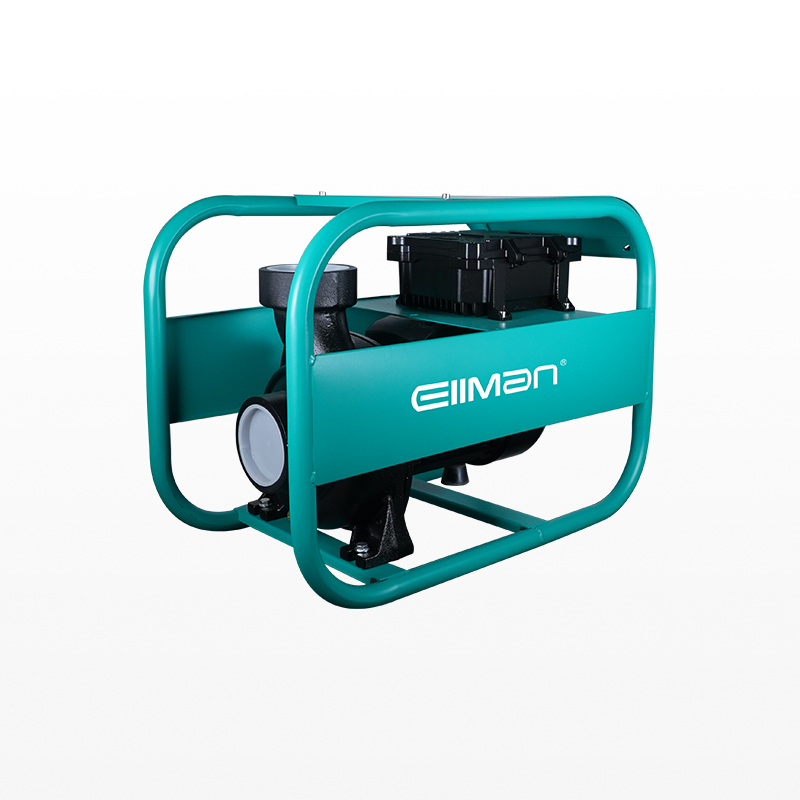
Total Dynamic Head (TDH) represents the actual physical resistance the Solar Pump must overcome to push water to your final destination. You cannot base purchasing decisions purely on the depth of your well.
You calculate TDH using this formula: Static Lift + Dynamic Water Level + Friction Loss = TDH.
Static Lift: This is the vertical distance from the top of your well casing to your final discharge point. If you pump into an elevated storage tank on a hill, you must measure the elevation change from the wellhead to the top of that tank.
Dynamic Water Level (Drawdown): This refers to the depth to the water surface while the pump actively runs. When you extract water, the resting water level drops and forms a "cone of depression." You must use this lower dynamic level for your calculations.
Friction Loss: This defines the pressure lost as water travels through your pipe network. Pipe diameter, total length, and internal texture all cause friction. Pushing large volumes of water through narrow pipes drastically increases TDH.
Flow Rate (GPM) | 1-inch Pipe (Head Loss in Ft) | 1.25-inch Pipe (Head Loss in Ft) | 1.5-inch Pipe (Head Loss in Ft) |
|---|---|---|---|
5 GPM | 1.5 ft | 0.5 ft | 0.2 ft |
10 GPM | 5.2 ft | 1.6 ft | 0.7 ft |
20 GPM | 18.5 ft | 5.8 ft | 2.5 ft |
30 GPM | 38.0 ft | 12.2 ft | 5.3 ft |
Once you calculate your final TDH, you must match it against manufacturer performance charts. Cross-reference your calculated TDH with the specific GPM curve measured at 4 to 6 hours of sunlight. Ignore theoretical maximums, as they rarely reflect practical daily operating conditions.
Choosing the correct electrical architecture determines your system's efficiency and reliability. You generally face two main pathways: specialized DC equipment or adapted AC equipment.
Engineers build direct DC units specifically for off-grid applications. They utilize highly efficient brushless motors. These systems require no power inversion, meaning energy from the panels flows directly to the controller. A major advantage is the built-in soft-start mechanism. Soft-start technology slowly ramps up the motor speed, completely eliminating the startup surge. Because of this, a 1500W panel array can safely and efficiently run a 1500W Solar Pump.
Standard AC pumps create complex engineering challenges off-grid. The primary issue is the inductive startup surge. A standard 1.1kW (1.5 HP) deep well AC motor can draw up to 5kW of surge power for the first few seconds of operation. This heavy hardware requirement demands large, expensive low-frequency transformers. You also need massive battery banks to provide enough instant amperage. Without these oversized components, the inverter will quickly overheat and fail.
Chemical batteries are notoriously the weakest link in any off-grid water system. They degrade rapidly in extreme temperatures and require routine replacement. We recommend the "Tank as a Battery" strategy for optimal system design.
Your shortlisting logic should focus on mechanical storage rather than chemical storage. Choose a direct-DC system and pump water slowly all day into a large, elevated holding tank. You then use simple gravity to provide final water pressure to your troughs or household. This elegant approach completely eliminates the need for volatile lithium or lead-acid batteries.
The controller serves as the central brain of your water system. It protects the hardware and optimizes energy flow. You must carefully evaluate its features before purchasing.
MPPT Optimization: Maximum Power Point Tracking (MPPT) dynamically adjusts voltage and current. It is absolutely essential for maintaining water flow during early mornings, late afternoons, or days with partial cloud cover.
Dry-Run Protection: The controller must accept a low-water sensor input. If the dynamic water level drops below the motor, the sensor triggers an automatic shutdown to prevent destructive dry-running.
High-Water Tank Sensor: This function shuts off power once your gravity holding tank reaches full capacity, preventing messy and wasteful overflows.
You cannot simply match panel wattage to motor wattage evenly. You must multiply the motor's daily Watt-hour requirement by 1.2. This 20% buffer compensates for inherent system inefficiencies, wiring resistance, and thermal heat loss on the panels.
Additionally, you must strictly monitor your array's Open Circuit Voltage (Voc). Ensure the combined Voc of your panel array never exceeds the controller's maximum limit. This step requires careful attention. In freezing temperatures, photovoltaic panels become more conductive and produce significant voltage spikes. If you string too many panels in series, a cold morning can send a voltage spike that instantly destroys the controller.
Deep well environments expose equipment to immense pressure, corrosive minerals, and abrasive sand. You must prioritize high-grade construction materials to ensure long-term functionality.
For deep applications, restrict your shortlist strictly to units featuring full stainless-steel housings. You should also demand food-grade metal interior components. Cheap plastic impellers warp under high head pressure. They also become brittle after prolonged submersion. Stainless steel effectively resists degradation and prevents galvanic corrosion when submerged in mineral-heavy groundwater.
Brushless DC motors represent the current industry standard for longevity. Because they lack physical carbon brushes, they experience minimal internal friction. Manufacturers often rate high-quality brushless motors for 30,000 to 50,000 hours of continuous operation.
However, you must consider implementation realities regarding the pumping mechanism itself. Helical rotor designs provide incredible efficiency for low-power, high-lift scenarios. Unfortunately, the rubber stators inside helical rotors are highly susceptible to wear in sandy or iron-heavy soil. If your well produces sediment, look for vendors that offer accessible DIY rotor replacement kits or lifetime warranties on specific wear parts.
Successfully implementing an off-grid water system requires methodical engineering rather than guesswork. To summarize the evaluation path, accurately calculating your TDH and peak sun hour GPM protects your project against fatal under-sizing. Opting for a tank-storage architecture paired with a DC-direct motor prevents extreme budget bloat caused by unnecessary battery banks and massive inverters.
As a next step, track down your official well report to verify your casing diameter and static water depth. Then, determine your daily water requirement based on your worst-case reference month. Finally, utilize an authoritative manufacturer's performance curve chart to select the precise wattage kit necessary to overcome your specific Total Dynamic Head.
A: Yes, but it requires a significantly oversized low-frequency inverter. You generally need an inverter rated three times higher than the pump's running wattage to handle the inductive startup surge safely. Because of this expensive hardware requirement, it is usually less cost-effective than simply replacing the existing unit with a dedicated direct-DC model.
A: No. Unless you explicitly require pressurized water at night without using a holding tank, batteries are an unnecessary expense. Pumping water into an elevated tank during the day and relying on gravity for final pressure is a far more reliable and economical solution.
A: A high-quality system equipped with an MPPT controller will continue to pump water, though at a noticeably reduced GPM rate. Sizing your storage tank to hold two to three days' worth of reserve water is your best safeguard against multi-day weather events.