Views: 0 Author: Site Editor Publish Time: 2026-05-26 Origin: Site


Rising diesel prices and grid unreliability constantly threaten remote agricultural operations worldwide. Farm operators face an ongoing battle. They need consistent irrigation without escalating operational costs. A reliable water supply remains non-negotiable for crop yields and livestock health. Yet, relying on fossil fuels or unpredictable electrical grids leaves you highly vulnerable to external supply shocks.
This article moves past basic renewable energy benefits. We provide a rigorous, technical evaluation of solar pumping equipment. You will learn how to accurately match specific pump technologies to your exact water sources, depth requirements, and daily flow rates. We acknowledge the high upfront capital expenditure of these off-grid systems. However, we validate their deployment through operational independence and extreme reliability. By understanding the core technologies and system architectures, you can secure your agricultural water supply for decades. Read on to master the framework for choosing the right system.
The 10-meter depth rule dictates your baseline choice: surface pumps for shallow water, submersible pumps for deep boreholes.
Direct Current (DC) solar pumps eliminate inverter energy losses for smaller setups, while Alternating Current (AC) pumps are required for high-volume, commercial-scale irrigation.
Hybrid solar pumping systems mitigate weather risks by seamlessly switching between solar, diesel generators, and the grid.
System design should prioritize "storing water, not power"—using gravity-fed elevated tanks instead of expensive, degradation-prone battery banks.
Selecting the correct hardware begins with understanding your specific hydrological environment. You cannot force a pump to perform outside its physical design limits. The foundational metric you must evaluate is vertical lift distance. The 10-meter depth threshold acts as the absolute dividing line between the two primary pump categories.
Surface pumps provide excellent solutions for accessible water sources. They represent the standard choice for shallow wells, open creeks, farm ponds, and livestock water troughs. You install these units entirely above ground, typically inside a protected pump house or weather-proof enclosure. Because the equipment remains dry, operators can perform routine maintenance without pulling heavy machinery out of a deep casing.
Mechanically, a surface pump relies on suction. It creates a vacuum at the impeller, allowing atmospheric pressure to push water up the intake pipe. This "pulling" mechanism works flawlessly at shallow depths. It keeps the initial hardware costs relatively low. However, this design carries a severe limitation governed by physics. If the vertical distance from the pump down to the water surface exceeds 10 meters, the pump will fail. It becomes highly susceptible to cavitation. The suction lift breaks, water turns into vapor pockets, and the pump runs dry. You must only deploy surface pumps when you guarantee the water level will never drop below this critical threshold during dry seasons.
When you draw water from deep boreholes or require high-head vertical delivery, you must use submersible pumps. These units are fully sealed inside watertight stainless steel casings. You lower them directly into the well or water source. Because they sit completely submerged, they never struggle with suction lift. Instead of pulling water, they push it upward. Pushing water requires significantly less energy. This mechanical advantage yields much higher operational efficiency.
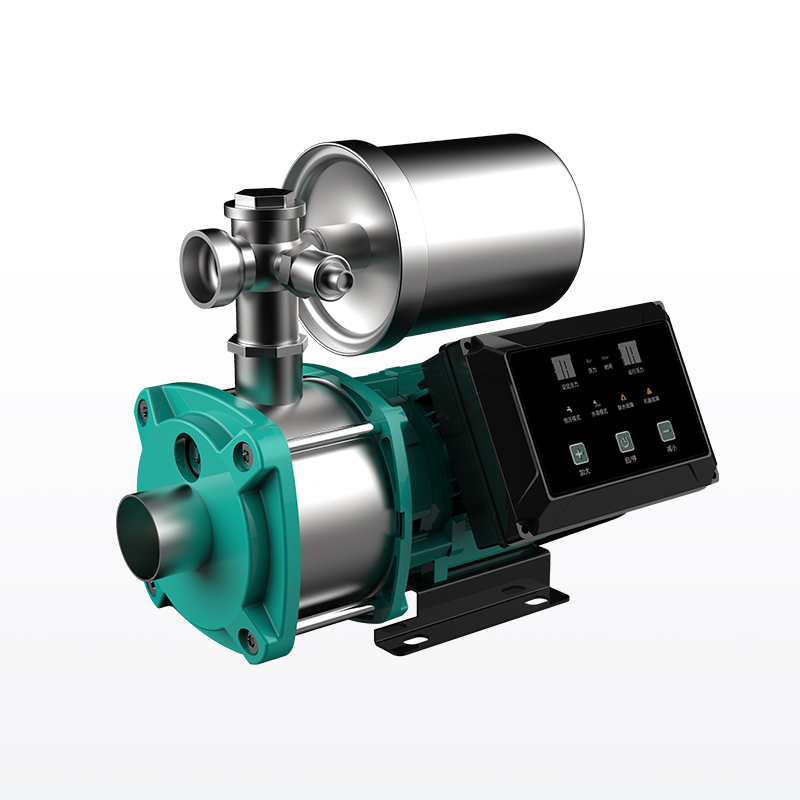
Choosing the right Solar Pump ensures maximum water delivery for deep-well applications. When evaluating submersibles, you must choose between two distinct sub-types based on your pressure and volume needs:
Helical Rotor Pumps: These utilize positive displacement. They feature a metal rotor twisting inside a rubber stator. They excel in low-volume, high-pressure scenarios. They push water from extreme depths efficiently, even with minimal solar input during early mornings.
Centrifugal Submersible Pumps: These rely on a stack of rotating impellers to generate kinetic energy. They perform best in high-volume, lower-pressure applications. If you need massive amounts of water from a moderate depth to flood a field, centrifugal models are your target choice.
Once you match the pump body to your water depth, you must evaluate the electrical architecture driving the motor. The power system you select dictates the scalability, efficiency, and ultimate reliability of your irrigation network.
Solar panels naturally generate Direct Current (DC) electricity. A DC pump utilizes this raw power directly. This creates a highly efficient energy loop. The system operates entirely without an inverter, eliminating power conversion losses. Nearly every watt captured by the photovoltaic panels transfers straight into rotational energy.
Despite their superior efficiency, DC systems face strict limitations. Manufacturers primarily design them for small-to-medium off-grid applications. They generally operate on 12V to 24V architectures. If you need to drive basic drip irrigation lines or fill remote livestock tanks, a DC setup remains unmatched. However, if you attempt to scale a DC system for massive commercial agriculture, the thick cabling required to carry high DC currents becomes prohibitively expensive.
Large-scale commercial agriculture demands high flow rates and high horsepower. For these heavy-duty applications, Alternating Current (AC) pumps become mandatory. Most standard industrial pumps run on AC power. You can access a massive variety of off-the-shelf AC models capable of moving thousands of gallons per minute.
The drawback involves energy conversion. Because panels produce DC, you must install a solar inverter—often a Variable Frequency Drive (VFD). The inverter translates the solar panels' DC output into usable AC power. This conversion process introduces marginal efficiency losses, typically between 2% and 5%. It also adds another complex electronic component to your system. Inverters require cooling, protection from dust, and eventual replacement, slightly increasing your long-term maintenance scope.
Commercial farming operations cannot halt irrigation simply because clouds block the sun. For critical agricultural projects where water stoppage causes catastrophic crop loss, hybrid solar pumping systems provide the ultimate operational security.
These systems feature advanced dual-input controllers. During peak sun hours, the controller draws 100% of its power from the solar array. As heavy cloud cover rolls in, or as dusk approaches, the smart controller automatically detects the voltage drop. It seamlessly auto-switches to a secondary power source. It can draw supplementary power from a backup diesel generator or the municipal grid. Some advanced controllers even blend power, taking 60% from the sun and pulling only the remaining 40% from the grid. We consider this the standard recommendation for bottom-of-the-funnel buyers prioritizing absolute risk mitigation.
Below is a comparative chart outlining the three architectures:
System Type |
Efficiency |
Ideal Application |
Inverter Required? |
Scalability |
|---|---|---|---|---|
DC Solar Pump |
Extremely High |
Small drip irrigation, livestock troughs |
No |
Low to Medium |
AC Solar Pump |
High (minus conversion loss) |
Large-scale commercial irrigation |
Yes (VFD) |
Very High |
Hybrid System |
High |
Critical crops requiring 24/7 water security |
Yes |
Very High |
Procuring a Solar Pump requires more than browsing a catalog. Farm operators must treat the sizing and design process as a strict engineering exercise. Oversizing wastes capital, while undersizing destroys crops. Follow this structured decision framework to guarantee optimal performance.
Audit the Water Source: Never guess your depth parameters. You must calculate exact dynamic water levels. Measure the static water level (where the water sits when undisturbed). Then, calculate the seasonal drawdown (how far the water level drops during aggressive pumping). Add the vertical lift to the friction loss inside your pipes to determine Total Dynamic Head (TDH). This exact number dictates if you need a surface or submersible unit.
Define Daily Water Demand: Calculate your requirements in Gallons Per Day (GPD) or Liters Per Day (LPD). You must match peak crop water requirements to the pump's daily flow rate capabilities. Do not size a pump based on arbitrary maximum outputs. Look at the specific evapotranspiration rates of your crops during the hottest month of the year. Build the system around that exact metric.
Evaluate Infrastructure and Storage:
The Battery Fallacy: Many new buyers request large battery banks to enable night pumping. We strongly advise against relying on chemical batteries. Deep-cycle batteries add massive upfront costs, degrade quickly in hot climates, and require replacement every few years.
The Gravity Solution: Instead of storing electrical power in batteries, store kinetic energy in water. We recommend sizing your system to pump aggressively during daylight hours. Push that water into an elevated 500L to 5000L+ storage tank. Once the sun sets, utilize gravity feed to drive 24/7 drip irrigation. Storing water is infinitely cheaper and more reliable than storing electricity.
Check Subsidies and Compliance: Local regulations dramatically impact procurement. Many regions currently offer dedicated agricultural grants, tax rebates, or equipment subsidies. Governments actively incentivize replacing fossil-fuel equipment with renewable infrastructure. Investigate local net-metering schemes if you plan to tie an AC system into the grid. Proper compliance can drastically lower your initial capital requirements.
Even a perfectly sized system can fail if you ignore environmental risks during installation. Agricultural environments present harsh realities. Dust, sediment, and extreme weather will test your equipment daily. Address these implementation hurdles before finalizing your procurement contracts.
Filtration Requirements: If you utilize a solar pump to drive drip irrigation lines, you must integrate strict water filtration. Solar pumps often operate at variable pressures depending on cloud cover. Low-pressure periods can allow fine sediment to settle and completely clog your emitters. Install high-grade screen or disc filters between the pump discharge and the field distribution manifold.
Theft and Environmental Protection: Portable solar panels carry high street value. Theft remains a serious risk in remote agricultural zones. Secure your arrays using anti-theft one-way screws and mount them on high poles rather than ground racks. Furthermore, protect your sensitive electronic controllers. In extreme dry or dusty climates, controllers overheat if their cooling fins clog with dirt. Mount controllers inside ventilated, NEMA-rated protective casings.
Vendor Shortlisting: Do not accept vague quotes from suppliers. Advise your procurement team to demand complete Bill of Materials (BoM) transparency. You need itemized specifications for the panels, the pump, the motor, and the controller. Insist on standardized warranty periods covering both the photovoltaic panels (usually 25 years) and the mechanical pumps (usually 2 to 5 years). Most importantly, demand verified performance charts. These charts must prove the exact flow-rate-to-wattage ratios under various dynamic head pressures.
Choosing the right solar pumping equipment represents a critical intersection of hydrological realities and operational strategy. You must precisely map your water depth to decide between surface and submersible technologies. You must also align your electrical architecture with your flow demands, utilizing AC or Hybrid setups for massive commercial loads. Finally, prioritizing elevated water tanks over battery banks ensures maximum reliability.
Transitioning to off-grid pumping extends far beyond eco-friendly farming practices. It serves as a calculated, aggressive hedge against energy inflation and unpredictable supply chain disruptions. By engineering a system based on strict technical parameters, serious agricultural operations can secure independent, reliable water delivery for decades to come.
A: Yes, they operate on cloudy days, though the water flow rate drops significantly due to reduced solar irradiance. They do not pump water at night unless connected to a battery bank or hybrid grid-tie system. To ensure nighttime irrigation, operators pump water into elevated storage tanks during the day and use gravity to distribute it at night.
A: Modern submersible units can reach dynamic depths exceeding 300 meters (approx. 1000 feet). However, pumping from extreme depths requires massive energy to overcome gravity. You will need a significantly larger photovoltaic array and a high-voltage motor to maintain adequate flow rates at such depths.
A: Yes. You can retrofit existing AC grid pumps using a Solar Variable Frequency Drive (VFD). The VFD acts as a smart inverter. It accepts DC power from newly installed solar panels, converts it to AC, and modulates the frequency to smoothly drive your legacy pump motor without power spikes.
A: Maintenance remains minimal compared to diesel engines. You must routinely clean the solar panels to remove dust and bird droppings, which block sunlight. Inspect wire connections for corrosion. For the mechanical side, ensure intake filters stay clear of debris to prevent dry-running and protect the impellers.