Views: 0 Author: Site Editor Publish Time: 2026-03-31 Origin: Site


Irrigation is an essential aspect of agriculture, ensuring crops get the necessary water to thrive, especially in areas where rainfall is not consistent. With increasing concerns about sustainability and reducing dependence on grid electricity, solar-powered pumps have become a popular choice. Solar pumps are efficient, cost-effective, and environmentally friendly, offering a renewable energy solution for irrigation. However, selecting the right solar pump requires understanding various factors such as water source, pump capacity, flow rate, solar panel size, and the overall cost-effectiveness of the system.
A solar pump is powered by solar energy, which is captured through photovoltaic (PV) panels. These panels convert sunlight into electricity, which then powers the pump to move water from a source to the irrigation system. Solar pumps are ideal for farms and agricultural operations, especially in areas with abundant sunlight but limited or no access to grid power.
While solar pumps generally have higher upfront costs than grid-powered systems, they provide significant savings in the long run due to their low operating costs and minimal maintenance. Solar pumps work effectively in remote locations and off-grid areas, providing a sustainable and reliable water source for irrigation.
The first step in choosing the right solar pump is understanding your irrigation requirements. This includes the area to be irrigated, the type of crops being grown, and the water source.
Irrigation Area: The size of the area that needs to be irrigated will determine the flow rate required. Larger areas require higher flow rates to ensure uniform irrigation.
Water Source: The depth of the water source plays a significant role in determining the pump type. Shallow sources require surface pumps, while deeper water sources (such as wells) will need submersible pumps.
Water Flow Rate: The flow rate indicates how much water needs to be delivered to the irrigation system per unit of time. Higher flow rates are required for larger areas or crops with higher water demands.
By evaluating these factors, you will have a clearer idea of the solar pump capacity and type you need.
Solar pumps generally fall into two categories: surface pumps and submersible pumps. The type of pump you choose depends largely on the depth of your water source.
Surface pumps are designed to lift water from shallow sources, such as ponds, rivers, and shallow wells. These pumps are placed above the water source and use suction to move the water. They are relatively easy to install and are suitable for small-scale irrigation systems.
Submersible pumps are designed for deeper water sources, such as deep wells. These pumps are placed underwater and are capable of lifting water from greater depths. While they are more complex to install and costlier than surface pumps, they are highly efficient for deep-water applications.
Criteria | Surface Pump | Submersible Pump |
Ideal Water Source | Shallow ponds, rivers, or lakes | Deep wells or underground reservoirs |
Installation Complexity | Easier to install | Requires more complex installation |
Efficiency | Suitable for shallow water sources | Best for deep water sources |
Cost | Lower cost | Higher cost due to complexity |
Depending on your water source, you will need to decide between a surface pump for shallow sources or a submersible pump for deep wells.
Choosing a solar pump with the correct flow rate and pressure is crucial for ensuring effective irrigation. The flow rate indicates how much water is delivered over a set period, while pressure determines how well the water is distributed through the irrigation system.
The flow rate is typically measured in gallons per minute (GPM) or liters per second (L/s). Larger irrigation areas or crops with high water needs require higher flow rates. The flow rate should be matched to the specific needs of your irrigation system, ensuring that the pump can deliver adequate water to cover the entire field or crop area.
Pressure is particularly important for sprinkler systems. Sprinklers require a certain level of pressure to distribute water evenly across the area. Drip irrigation systems, on the other hand, generally require less pressure. You should ensure that the pump’s pressure matches the requirements of your irrigation system for efficient water distribution.
Criteria | Low Pressure (Drip) | High Pressure (Sprinklers) |
Pressure Requirement | Low pressure needed | Higher pressure required |
Flow Rate | Relatively low flow rate | Higher flow rate for large areas |
Pump Type | Suitable for surface or small pumps | Suitable for larger submersible pumps |
Understanding the flow rate and pressure requirements is essential to choosing the right solar pump and ensuring that it meets the demands of your irrigation system.
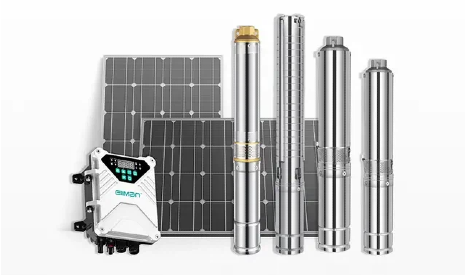
The size and efficiency of the solar panel array determine how much power is available to run the pump. The more powerful the pump, the larger the solar panel array needed.
For larger pumps, more solar panels are required to generate enough power to operate the system efficiently. The size of the solar panel array should match the pump’s energy needs to ensure it runs efficiently during the day. The location where the system will be installed also plays a role in determining the number of panels needed. Areas with more sunlight require fewer panels, while regions with less sunlight may need a larger array or additional battery storage.
The performance of the solar pump is directly related to the amount of sunlight the panels receive. If your location experiences frequent cloudy days, you may need a larger solar array or consider adding batteries to store energy for use during the night or cloudy periods.
While solar pumps have higher initial installation costs compared to traditional electric grid-powered pumps, they offer significant savings in the long run. Solar pumps are powered by free solar energy, so there are no electricity bills, and maintenance costs are minimal.
The initial cost of a solar pump system includes the pump, solar panels, inverter, and installation. Depending on the pump’s capacity and the required solar panel array, the initial investment can range from $3,000 to $10,000.
Solar pumps have low operational costs since they rely on solar energy. The main ongoing costs are periodic maintenance, such as cleaning the solar panels and replacing the batteries (if applicable), which typically need replacement every 5 to 10 years.
Solar pumps provide excellent returns on investment. With no electricity bills and minimal maintenance costs, the ROI on solar pumps is usually achieved within 5 to 7 years. After that, the system operates at minimal cost, making it a cost-effective solution for long-term irrigation needs.
One of the key advantages of solar pumps is their durability and longevity. Because they have fewer moving parts compared to traditional electric pumps, they experience less wear and tear. Additionally, high-quality solar panels can last for 20-25 years, ensuring that your investment remains operational for many years.
When selecting a solar pump, it’s important to choose a system made from high-quality, corrosion-resistant materials to withstand outdoor conditions. Pumps that are built with durable materials will last longer, reducing the frequency of repairs or replacements.
Opt for solar pumps with permanent magnet motors, as they are known for their energy efficiency and long lifespan. These motors require less maintenance, making them ideal for long-term use.
Choosing the right solar pump for your irrigation system is a crucial decision that depends on several factors, including the size of your irrigation area, the water source, flow rate, pressure requirements, and solar panel capacity. While solar pumps may have a higher upfront cost than electric pumps, they provide long-term savings and environmental benefits. They are reliable, cost-effective, and perfect for off-grid locations with abundant sunlight.
If you are considering a solar pump for your irrigation needs, it’s essential to assess your specific requirements and select a system that matches the size and type of your irrigation setup. For those looking for high-quality and efficient solar pump solutions, Zhejiang Eiiman Zhihui Technology Co., Ltd. offers a range of solar pumps designed to meet various irrigation needs.
Q: How do I determine the flow rate needed for my irrigation system?
A: The flow rate needed depends on the area being irrigated and the crop’s water needs. Larger areas or high-water-demand crops require higher flow rates.
Q: Are solar pumps suitable for deep well irrigation?
A: Yes, submersible solar pumps are ideal for deep well irrigation. These pumps are specifically designed to lift water from great depths.
Q: How long do solar pumps last?
A: Solar pumps can last between 10 to 20 years, depending on the motor quality and maintenance. The solar panels typically last between 20 and 25 years.
Q: Do solar pumps work efficiently in cloudy areas?
A: While solar pumps are most efficient in sunny areas, they can still operate effectively in cloudy regions, though additional panels or battery storage may be needed to ensure reliable performance.