Views: 0 Author: Site Editor Publish Time: 2026-04-09 Origin: Site


In recent years, solar-powered water pumps have become an increasingly popular solution for irrigation, water supply, and other pumping needs. These pumps operate on renewable solar energy, offering a cost-effective and eco-friendly alternative to traditional grid-powered pumps. However, when it comes to choosing the right solar-powered water pump for your needs, one important question arises: How deep can a solar-powered water pump reach?
This article explores the capabilities of solar-powered pumps, specifically their ability to pump water from various depths. We will examine the factors that influence how deep these pumps can effectively reach, the types of solar-powered water pumps available, and how to choose the right one based on your water source.
A solar-powered water pump works by converting sunlight into electricity using photovoltaic (PV) solar panels. This electricity then powers the pump, allowing it to move water from one location to another. Solar-powered pumps are used for a variety of applications, including irrigation, livestock watering, and even supplying water to remote communities.
Unlike traditional electric pumps that depend on grid power, solar-powered pumps offer a renewable and sustainable solution that operates independently of the grid. They are particularly useful in remote areas, where electricity access is limited or non-existent.
However, one key factor in determining the right solar-powered pump is understanding how deep the pump can reach. The depth at which a pump can operate is critical for selecting the right system, as different types of pumps are designed for various water sources and depths.
Solar-powered water pumps can be classified into two main categories: surface pumps and submersible pumps. The type of pump you choose will depend on the depth of your water source and the specific requirements of your system.
Surface pumps are designed to draw water from shallow sources. These pumps are typically installed above the water source and use suction to move water. The water source can be a shallow well, a river, a pond, or a lake. These pumps are ideal for situations where the water is no more than a few meters deep.
Maximum Depth: Surface pumps typically work well for water sources that are up to 30 feet (9 meters) deep. If the water source is located deeper than this, the suction power of surface pumps becomes inefficient.
Limitations: Surface pumps are less efficient at pulling water from greater depths, making them unsuitable for deep wells or underground water sources.
For shallow water sources, surface pumps are an excellent choice, as they are generally more affordable and easier to install. However, for deeper sources, a submersible pump may be necessary.
Submersible pumps are designed for deeper water sources, such as deep wells or underground reservoirs. These pumps are submerged in the water, and the pump motor pushes the water to the surface. Submersible pumps are highly efficient and are the go-to solution for deep-water pumping needs.
Maximum Depth: Submersible solar-powered water pumps can reach depths of up to 400 feet (120 meters) or more, depending on the pump size and capacity. This makes them ideal for deep wells and water sources that are located far underground.
Advantages: Submersible pumps are much more efficient than surface pumps when it comes to lifting water from greater depths. They are also less prone to cavitation (a phenomenon where air bubbles are created in the pump), which can cause damage to the pump motor.
Submersible pumps are commonly used for agricultural irrigation, water supply systems in remote areas, and deep-well applications. Their ability to handle deep-water sources and maintain high efficiency makes them a valuable solution for many water pumping needs.
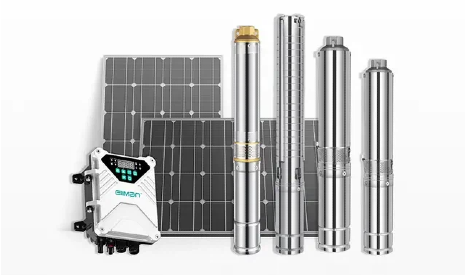
While surface and submersible pumps are generally rated for specific depths, several factors can affect the performance and maximum depth a solar-powered water pump can reach. These factors include:
The performance of a solar-powered pump depends largely on the energy generated by the solar panels. The larger the pump, the more energy it needs to operate, which means that a larger solar panel array is required to pump water from greater depths.
More Panels for Deeper Depths: For deep-water pumping, you'll need a larger array of solar panels to ensure that the pump has enough energy to operate efficiently. Solar panel efficiency, the amount of sunlight available, and the system’s ability to store energy in batteries will all affect the pump’s performance.
The motor's power rating determines the depth at which the pump can operate efficiently. More powerful motors are capable of pumping water from greater depths.
Higher Motor Power for Deeper Wells: Submersible pumps designed for deeper wells typically have more powerful motors to provide the necessary pressure to lift water from greater depths.
If the motor isn’t powerful enough, the pump may struggle to draw water from deep sources or may fail to function properly.
The flow rate (the amount of water moved per unit of time) and the pressure required to deliver the water to your system also impact how deep a solar-powered water pump can operate effectively. Pumps with higher flow rates and pressure requirements may be better suited for larger applications, but they also require more energy.
Balancing Flow Rate and Depth: If you need to pump a large volume of water from great depths, you may need a higher-capacity pump and a larger solar panel array to meet both the flow rate and depth requirements.
The amount of sunlight available in your location will significantly impact the pump’s performance, especially for deeper pumping applications. Solar-powered pumps rely on sunlight to generate energy, so areas with less sunlight may require larger solar panel arrays or additional energy storage.
Cloudy or Low-Sunlight Areas: In areas with cloudy weather or limited sunlight, you may need additional batteries to store energy during the day, allowing the pump to continue operating when the sun is not shining. Alternatively, you may need to opt for a larger solar panel system to compensate for the lack of sunlight.
The choice of solar-powered water pump largely depends on the depth of your water source, the volume of water required, and the available sunlight in your location. Here’s a simple breakdown to help you choose the best solar pump for your needs:
Factor | Surface Pump | Submersible Pump |
Maximum Depth | Up to 30 feet (9 meters) | Up to 400 feet (120 meters) |
Water Source | Shallow wells, rivers, ponds | Deep wells, underground sources |
Efficiency | Lower efficiency at greater depths | High efficiency for deep water |
Pump Type | Suction-based, placed above water | Submerged in water |
Best Use | Small-scale irrigation, garden use | Large-scale irrigation, deep wells |
When choosing a solar-powered pump, it’s essential to evaluate the depth of your water source and the application requirements. Surface pumps are a great option for shallow water sources, while submersible pumps are necessary for deep wells or underground reservoirs.
Solar-powered water pumps provide an excellent solution for a wide variety of water pumping needs, from agricultural irrigation to livestock watering and even for remote community water supply systems. By understanding the depth capabilities of solar pumps, you can ensure that you select the right pump for your application.
Whether you need a pump for shallow ponds or deep wells, there are solar-powered solutions to meet your needs. By considering factors such as solar panel capacity, pump motor power, and available sunlight, you can choose the most efficient system for your water pumping needs.
For further information on solar pumps and tailored solutions for your water needs, you can contact Zhejiang Eiiman Zhihui Technology Co., Ltd., a trusted provider of high-quality solar-powered pumping systems.
Q: How deep can a surface solar pump reach?
A: Surface solar pumps are suitable for shallow water sources and are effective up to depths of around 30 feet (9 meters).
Q: Can a solar pump work for deep wells?
A: Yes, submersible solar pumps are designed for deep wells and can effectively pump water from depths of up to 400 feet (120 meters).
Q: Do I need additional energy storage for a solar pump?
A: In areas with limited sunlight or for systems that require continuous operation, batteries can be used to store excess energy for use when sunlight is unavailable.
Q: How can I determine the right solar pump for my needs?
A: The right solar pump depends on the depth of your water source, the required flow rate, and the available sunlight in your area. Surface pumps are ideal for shallow sources, while submersible pumps are necessary for deeper wells.