Views: 0 Author: Site Editor Publish Time: 2026-05-28 Origin: Site


Investing in a Solar Pump system often brings up one major hesitation. Buyers worry about facing severe water shortages or unexpected equipment failure during extended overcast weather. No one wants crops to dry up or livestock to go thirsty just because the sun disappeared behind heavy clouds. We must address this concern directly.
The immediate verdict is clear. Yes, modern solar pumps operate effectively on cloudy days, but flow rates proportionally decrease. System survival and continuous water delivery depend entirely on upfront redundancy planning. You cannot rely on perfect weather. Successful deployment requires smart engineering rather than hoping for clear skies.
To guarantee uninterrupted water supply, you need to understand the technical realities of low-light operation. Today, we will explore the proven design frameworks used to keep water flowing regardless of the forecast. Let us examine how intelligent hardware and proper storage mitigate bad weather.
Performance scales with irradiance: Expect 50–70% of peak flow on partly cloudy days, and 10–30% during heavy rain or thick overcast conditions.
Hardware protection matters more than power: Cheap, direct-connected DC pumps suffer premature motor burnout from cloudy-day voltage fluctuations. Advanced controllers are mandatory.
Physical storage beats chemical storage: Treating a high-capacity water tank as a "battery" remains the most cost-effective redundancy strategy for agricultural and domestic use.
Hybrid integration guarantees uptime: Commercial-grade systems utilize hybrid inverters with frequency-monitoring logic to seamlessly pull from AC grids or generators when solar output drops.
Photovoltaic panels harvest energy from the sun using two distinct methods. They absorb direct sunlight on clear days, but they also capture indirect or diffused light. When thick clouds cover the sky, sunlight scatters. Your solar panels still collect this diffused light and convert it into usable electricity. The system simply operates at a lower intensity.
You must set realistic data expectations for these output drops. A water system yielding 5 gallons per minute (GPM) in full sun will naturally slow down. Under moderate cloud cover, it may reduce to 2 or 3 GPM. Heavy overcast skies or rainy days typically yield between 10% and 30% of your panel array's rated capacity. For example, a 1000W array might only produce 100W to 300W during a storm. The pump will still pull water, but the total daily volume decreases significantly.
This table illustrates how varying weather patterns directly affect pumping volume and power generation. Use it as a baseline for performance expectations.
Weather Condition | Light Type | Power Yield (% of Peak) | Estimated Flow (from 5 GPM Base) |
|---|---|---|---|
Clear Sky | Direct Sunlight | 90% – 100% | 4.5 – 5.0 GPM |
Partly Cloudy | Direct & Diffused Mix | 50% – 70% | 2.5 – 3.5 GPM |
Heavy Overcast | Diffused Only | 10% – 30% | 0.5 – 1.5 GPM |
Interestingly, occasional rain provides a measurable advantage. We call this the "rain benefit anomaly." Many buyers view rain as a purely negative event for solar power. However, rain washes away accumulated dust, pollen, and bird droppings. This natural cleaning process restores long-term panel efficiency by 3% to 5%. A clean panel array captures diffused light far more effectively during the next cloudy cycle.
The biggest threat to a solar pumping system on a cloudy day is not a lack of water. The true danger lies in voltage fluctuations. Passing clouds cause sudden spikes and drops in available solar energy. Many DIY enthusiasts and consumers fall into a common pitfall. They buy cheap, direct-connected DC pumps without dedicated controllers. When clouds pass over, these direct-wired systems experience severe voltage drops. The motor stalls, heats up rapidly, and suffers rapid motor degradation. Eventually, the motor burns out completely.
You can prevent this damage by utilizing Maximum Power Point Tracking (MPPT) technology. An MPPT controller acts as the brain of your setup. It intelligently adjusts the electrical load to extract the maximum available power from the panels. Instead of forcing the motor to stall when voltage drops, the MPPT controller lowers the demand. It keeps the motor spinning slowly and safely, even during fluctuating weather.
Motor efficiency also plays a vital role. Modern systems utilize Brushless DC (BLDC) motors. These advanced motors convert over 90% of electrical energy into kinetic energy. Traditional brushed motors waste significant energy as heat. Because BLDC motors are so highly efficient, they lower the baseline wattage required to initiate pumping. They can start pulling water in extremely low-light environments where older pumps remain completely stationary.
Commercial-grade controllers feature a critical fail-safe mechanism called low-frequency standby protection. They constantly monitor the operational frequency of the power input. If heavy clouds drop the frequency below a safe threshold—typically under 25Hz for 20 continuous seconds—the system takes action. It enters a protective "standby mode." This shuts down the motor to prevent heat damage. The controller then automatically attempts a restart after a programmed delay. This logic guarantees your equipment survives unpredictable storms.
You cannot control the weather, but you can control your storage and power inputs. Agricultural engineers rely on three specific strategies to guarantee a steady flow of water during multi-day storms.
Treating a water tank as a highly efficient physical battery remains the smartest redundancy strategy. Chemical batteries degrade over time, but a water tank holds its volume indefinitely. It experiences zero capacity degradation. This makes it the most cost-effective solution for both agricultural and domestic use.
You must follow a strict sizing rule to make this work. Design the system to fill a reservoir holding three to five days' worth of anticipated water demand. During sunny periods, your pump will operate at peak efficiency. It will fill the tank quickly. When an extended overcast stretch hits, your livestock or household can draw directly from the physical reservoir. The pump can take a rest, and you avoid the stress of immediate water shortages.
Commercial-grade setups require absolute certainty. They utilize hybrid inverters equipped with frequency-monitoring logic. These inverters operate on a strict "Solar-First" logic. They prioritize free solar energy above all else. However, when thick clouds roll in and solar frequency dips below an operational threshold, the inverter seamlessly pulls power from an AC grid or a diesel generator.
You can customize the minimum frequency trigger to optimize your savings. For example, you might set the AC cut-in point at 35Hz. The system will run purely on solar until the sunlight gets too weak to maintain 35Hz. Once it drops below that mark, the grid smoothly takes over. This approach maximizes your free solar usage while minimizing expensive utility bills and fuel costs.
Adding a chemical battery bank makes sense for very specific use cases. It works best for small-scale applications, night-time pumping, or smoothing out rapid voltage fluctuations on partly cloudy days.
You must understand the transparent limitations of chemical storage. Deep discharging a battery during a multi-day storm damages its lifespan. Furthermore, recharging an empty lead-acid or lithium battery bank requires many hours of peak, direct sun. If you only get two hours of clear sunlight between storms, the battery will not fully recharge. This leaves you vulnerable to power loss.
If you live in a region known for persistent fog or heavy winter clouds, you should consider overpaneling. Overpaneling is the practice of installing a total solar array wattage higher than the pump’s maximum draw. By increasing the total panel count, you elevate the baseline current available during cloudy weather.
Many amateur installers fear this practice. They worry extra panels will "push" too many amps into the controller and fry the circuits. We must bust this "current push" myth completely. Solar panels do not force electricity into a system. MPPT controllers actively pull only the current they need based on the immediate load. If you attach a 2000W array to a 1000W pump controller, the controller simply caps the intake at 1000W on a sunny day. On a dark, cloudy day operating at 20% efficiency, the larger array generates 400W. A standard array would only generate 200W. The extra panels keep the pump running.
You must respect one critical engineering caveat when overpaneling. While overpaneling amps is safe and highly effective, you cannot ignore voltage limits. The array’s Open Circuit Voltage (Voc) must never exceed the controller’s maximum voltage limit under any temperature condition. Cold weather naturally causes panel voltage to spike. If your combined series voltage breaches the controller's limit, it will destroy the internal electronics instantly. Always calculate your Voc limits using extreme winter temperature data.
Choosing the correct equipment ensures your system survives cloudy climates. You must base your sizing calculations on local weather realities, not optimistic marketing claims.
Always base your system sizing on regional winter irradiance maps. Never size your system based on perfect summer days. Winter irradiance maps reveal the lowest average daily sunlight hours you will face. If you engineer your water system to deliver sufficient volume during the darkest month of the year, it will perform flawlessly year-round. This conservative approach guarantees reliability.
Next, you must select the correct pump mechanism based on your specific environmental needs. Every pump style behaves differently under low-light conditions.
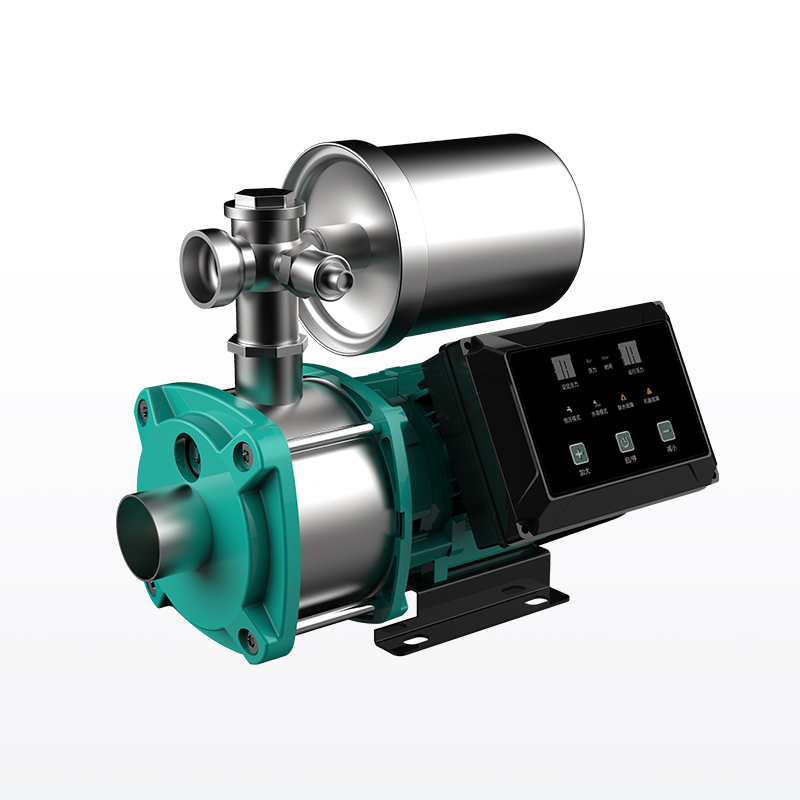
Solar Screw Pumps: These mechanisms deliver high head and low flow. They offer superior sand resistance. Because they require low starting torque, they excel at continuous, low-yield pumping during heavy overcast days. They remain ideal for deep wells.
Plastic Impeller Pumps: These models provide high volume and medium head. They shine during aggressive sunny-day agricultural irrigation. We highly recommend pairing plastic impeller models with massive tank storage strategies. They move huge volumes of water quickly before the clouds return.
Stainless Steel Impellers: Harsh water quality demands robust materials. If your well suffers from high salinity or acidity, standard plastics and cheap metals will degrade. Selecting a premium Solar Pump with stainless steel impellers becomes mandatory. Equipment longevity drives long-term value, preventing costly mid-season replacements.
Cloudy days absolutely do not render solar pumps useless. Instead, they simply test the quality of your system's engineering. A well-designed setup will continue to extract diffused light and deliver essential water, even during heavy overcast periods.
Successful deployment relies heavily on a combination of smart choices. You need MPPT hardware protection to prevent motor burnout. You need adequate physical water storage to bridge multi-day storms. Finally, you need data-driven panel sizing, like overpaneling, to maximize low-light performance. Neglecting any of these elements leaves your water supply vulnerable.
Your next step requires data collection. Evaluate your specific daily water volume requirements. Compare those numbers against your local winter weather irradiance data. By matching your real-world demand with regional sunlight constraints, you can determine if a standalone, tank-based, or hybrid system represents the right investment for your property.
A: Not if equipped with an MPPT controller with low-frequency standby protection. The controller intelligently lowers voltage demands and puts the motor to sleep before heat damage occurs. Cheap direct-connect pumps are at high risk of rapid burnout under these fluctuating conditions.
A: Yes, through overpaneling, provided the total series voltage remains safely below the controller's maximum Voc limit. The MPPT controller will safely pull the necessary amps. This boosts your baseline power generation during heavy overcast weather without damaging the hardware.
A: Yes, fog scatters light similarly to overcast conditions, reducing output to diffused light levels. Your power generation will drop significantly. A hybrid inverter or a pre-filled water tank is necessary to bridge heavy morning fog until the sun breaks through.
A: A water tank is exponentially cheaper, requires zero maintenance, and does not degrade over time like lead-acid or lithium batteries. Storing water instead of power remains the most reliable and cost-effective strategy for continuous off-grid supply.