Views: 0 Author: Site Editor Publish Time: 2026-04-13 Origin: Site


Permanent magnet variable frequency systems deliver unmatched energy efficiency for modern fluid management. However, they introduce a complex maintenance overlap. High-performance electrical drives must sync perfectly with precision mechanical motors. You cannot treat these units like standard induction pumps.
Operating these systems requires a fundamental shift in perspective. Maintenance is not just a generic checklist. It is a critical operational discipline to protect long-term financial returns. Proper care prevents irreversible damage, such as permanent magnet demagnetization. Ignoring these protocols will quickly lead to catastrophic failure.
This guide explores the exact protocols you need to keep your system running optimally. We will cover practical tolerances, verifiable diagnostic thresholds, and comprehensive lifecycle management. By following these enterprise-level standards, you can extend equipment life and avoid unexpected downtime.
Thermal & Electrical Threats: Overheating and current imbalance are the primary drivers of permanent magnet demagnetization.
Strict Component Lifecycles: VFD cooling fans require replacement every 3–5 years, and bus capacitors every 7 years, regardless of apparent condition.
Diagnostic Baselines: Demagnetization can be quantified by testing back electromotive force (EMF) drop, while 3-phase current deviations must remain below 10%.
Environmental Control: Employing the "Clean, Dry, Tight" methodology using oil-free compressed air and calibrated torque wrenches is non-negotiable for system longevity.
Standard induction pumps are rugged and forgiving. In contrast, treating a Permanent Magnet Variable Frequency Pump like a standard induction unit leads directly to premature failure. These advanced pumps endure a unique dual stress. They handle high-frequency electrical switching from the drive and heavy mechanical loads simultaneously. You must understand their specific vulnerabilities to protect them.
Magnets inside the rotor are powerful but highly sensitive to environmental extremes. Sustained operation above rated temperatures degrades the magnetic field. Once a magnet exceeds its thermal threshold, it loses strength permanently. Sudden electrical overloads also severely stress the magnetic flux. When demagnetization occurs, the motor draws more current to maintain output. This creates a vicious cycle of overheating and further degradation.
Variable Frequency Drives (VFDs) act essentially as susceptible computers paired with high-voltage power supplies. They are incredibly vulnerable to dust, thermal cycling, and moisture. Dust acts as an insulating blanket. It traps heat against sensitive microprocessors. Moisture mixes with airborne particles to create corrosive sludge. This sludge eats away at circuit boards and causes electrical shorts.
Mechanical friction generates intense heat. Incorrect lubrication volumes directly cause thermal buildup. Maintenance teams often over-grease bearings. Filling a cavity completely leaves no room for thermal expansion. The grease churns, traps heat, and eventually leaks out. Under-greasing causes rapid metal-on-metal wear. Both extremes ruin bearings and push excess heat into the motor casing.
You must establish baseline environmental controls for the pump and drive housing. The "3C" methodology provides a reliable framework for system longevity.
Airflow dictates thermal stability. Blocked vents destroy drives quickly. Follow these strict cleaning rules:
Maintain a strict 3-meter clearance zone around air intakes. Keep debris, boxes, and tools away.
Mandate the use of only oil-free, dry compressed air for cleaning VFD components.
Never use standard workshop air compressors for drive cleaning. They often spray hidden moisture and oil vapor directly onto sensitive boards.
Evaluate your enclosure ratings immediately. Standard NEMA 1 (IP20) enclosures are insufficient for damp environments. They feature open vents designed for clean, dry rooms. If you operate in areas prone to condensation, upgrade to NEMA 12 (IP54+) enclosures. These sealed units block moisture and airborne dust. Adding internal space heaters can also prevent overnight condensation when the pump powers down.
Thermal cycling and mechanical pump vibration constantly work to loosen terminal connections. Loose wiring creates high resistance. High resistance causes electrical arcing and rapid terminal melting. Advise against manual over-tightening. Technicians frequently strip threads by guessing torque limits. Specify the use of calibrated torque wrenches to meet exact manufacturer specifications. This is particularly crucial on explosion-proof joint surfaces, where compromised gaps ruin safety ratings.
You must transition from reactive to proactive maintenance. A calendar-based framework removes guesswork. It prevents critical components from failing unexpectedly.
Frequency |
Component |
Action Required |
Crucial Parameter |
|---|---|---|---|
Weekly |
Bearings & Fans |
Listen for abnormal noise; verify cooling fan spin. |
Acoustic baseline check. |
Monthly |
Air Intake Filters |
Clean or replace filters; verify outer seal integrity. |
Zero dust accumulation. |
Semi-Annually |
Bearing Lubrication |
Change bearing oil. |
Fill only to 1/3 or 1/2 capacity. |
Annually |
Gears & Shafts |
Check gear meshing and shaft alignment. |
Use guide wire tests. |
3–5 Years |
VFD Cooling Fans |
Proactive replacement. |
Replace regardless of condition. |
7 Years |
DC Bus Capacitors |
Proactive replacement. |
Prevents catastrophic drive failure. |
Monitor systems visually and acoustically. Listen for abnormal bearing whining or grinding. Verify cooling fan operation physically. Fans often fail silently if you only rely on software alerts. Clean or replace air intake filters monthly. Verify outer seal integrity around the VFD cabinet to stop environmental contamination.
Change bearing oil every six months. There is a crucial limitation here. Fill oil cavities only to 1/3 or 1/2 capacity. Overfilling causes severe heat retention and oil rejection. Annually, check gear meshing and shaft alignment. Use guide wire tests where applicable to measure precise wear patterns. Misalignment destroys bearings and seals faster than any other mechanical fault.
Certain components degrade predictably. You must replace them before they fail.
3–5 Years: Proactively replace VFD cooling fans. Plastic bearings wear out, and RPM drops slowly over time.
7 Years: Replace DC bus capacitors. The internal electrolyte dries out eventually. Failing to replace them leads to sudden, catastrophic drive failure.
Maintenance engineers need hard data points to diagnose hidden faults. Catching these issues early prevents complete system failure.
Demagnetization is silent but deadly. If the VFD persistently throws overload alarms, you must test the motor. Outline this standard diagnostic loop:
Disconnect the pump head from the motor.
Run the motor at no-load up to its rated frequency.
Measure the output voltage, known as back electromotive force (EMF).
Compare the reading to the motor's nameplate value.
If the back EMF falls significantly below the nameplate value—for example, a drop exceeding 50V—demagnetization is confirmed. The rotor must be replaced.
Mandate routine checks of the three-phase current. Current imbalance generates excessive heat in the stator windings. Set a strict operational threshold. No single phase should deviate by more than 10% from the average of the other two phases. If deviation exceeds 10%, inspect power supply quality and cable integrity immediately.
Stopping a heavy fluid load creates reverse energy. Warn your team against reverse braking at rated voltages without appropriate current-limiting resistors. Regenerative energy spikes voltage levels dangerously high. This practice directly spikes demagnetization risks and routinely blows VFD components.
Improper downtime management destroys pumps faster than active operation. Storing a highly engineered pump requires precise preparation.
Never leave water inside a dormant pump. Completely drain the pump casing. Use small blowers if necessary to push water out of hidden crevices. Trapped water causes internal corrosion. In cold environments, freezing water causes freeze-expansion cracking, which destroys the metal casing entirely.
Store units vertically. Vertical storage prevents internal lubrication oil from leaking past seals into the stator windings. Oil saturation ruins winding insulation. Avoid direct sunlight in your storage facility. Ultraviolet light causes premature degradation of polymer components, wire jackets, and VFD interface screens.
Do not let equipment sit untouched for years. Implement a strict 6-month spin rule. Briefly power on the unit and manually rotate the shaft every six months. This prevents bearing seizure known as false brinelling. Furthermore, applying power to the VFD helps keep the internal capacitor dielectrics formed. Unpowered capacitors degrade and fail violently when finally energized.
Procurement officers must evaluate maintenance overhead when assessing pumping infrastructure. Aging systems drain budgets through constant intervention.
A proactive maintenance program lasting 10 to 13 years requires investment. However, this cost remains a fraction of the expense tied to unplanned downtime. Emergency stator rewinding and expedited parts shipping cost significantly more than routine care. By minimizing electrical stress and thermal degradation, you maximize the working capital invested in the machinery.
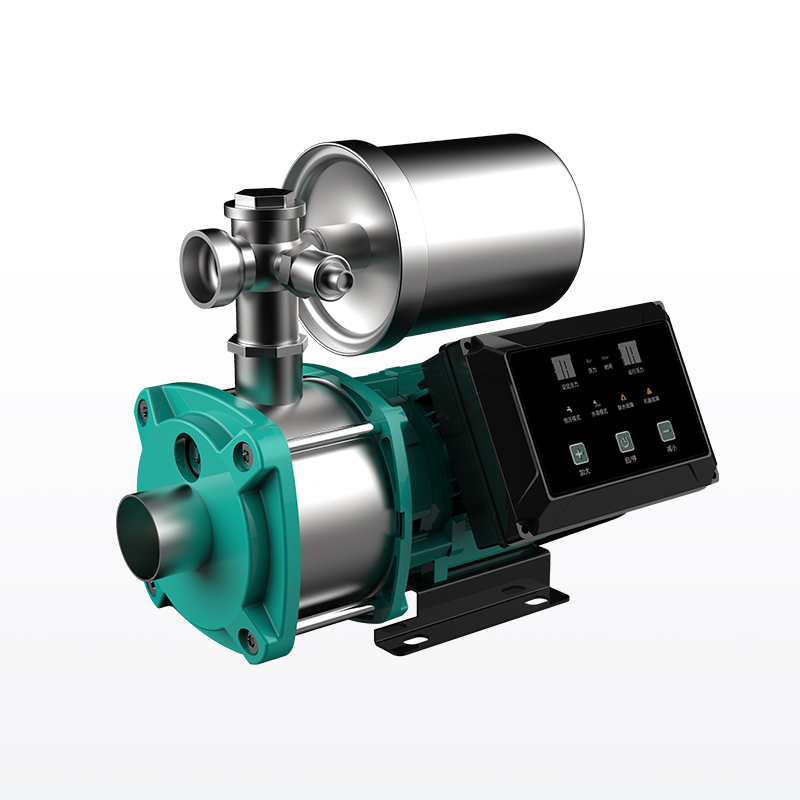
Upgrading to an intelligent permanent magnet variable frequency booster pump completely shifts the maintenance burden. These modern systems automate many traditional checks. They feature built-in diagnostic logging to track thermal trends over time. They offer auto-detection of phase imbalance, instantly shutting down before damage occurs. Furthermore, they deliver variable flow constant pressure. They maintain precise 1–1.5 × 10⁵ Pa parameters without requiring manual tuning or constant mechanical adjustments.
Recommend a comprehensive audit of your existing pump's maintenance logs. Compare your historical breakdown data against the component lifecycles outlined above. This audit will reveal whether a preventative overhaul makes sense, or if transitioning to a fully intelligent system represents the most cost-effective path forward.
Permanent magnet variable frequency pumps demand precision care to function reliably. You must enforce strict thermal management, apply precise lubrication techniques, and conduct proactive electrical testing. Treating these advanced machines like older induction models guarantees costly failures.
Adhering to hard component replacement timelines provides the highest leverage. Changing VFD cooling fans every 5 years and capacitors every 7 years extends overall system life significantly. These non-negotiable rules save thousands of dollars in emergency repair costs.
We encourage facilities teams to act immediately. Update your Standard Operating Procedures (SOPs) today. Include back-EMF testing for demagnetization and mandate torque-calibrated tightening for all electrical connections. Proactive discipline builds a resilient, efficient pumping network.
A: You will likely see persistent VFD overload alarms. To confirm, disconnect the pump head and run the motor at no-load to its rated frequency. Measure the output voltage (back EMF). If this voltage falls significantly below the motor's nameplate value (e.g., dropping by more than 50V), the motor has suffered demagnetization.
A: No. You must strictly use oil-free, dry compressed air. Standard workshop air compressors often spray hidden moisture and oil vapor onto sensitive electronic boards. This combination creates a corrosive sludge that causes short circuits. Never use standard workshop air on internal VFD components.
A: These pumps typically require a baseline inlet pressure of 1–1.5 × 10⁵ Pa to operate safely. You must completely open the inlet valve prior to startup. Starting the pump with a closed valve or inadequate pressure leads to dry running, which destroys mechanical seals in minutes.
A: The industry standard mandates replacing DC bus capacitors every 7 years. Over time, the internal dielectric fluid dries out, drastically reducing their capacity to filter voltage. Replacing them on this schedule prevents sudden, catastrophic drive failures.